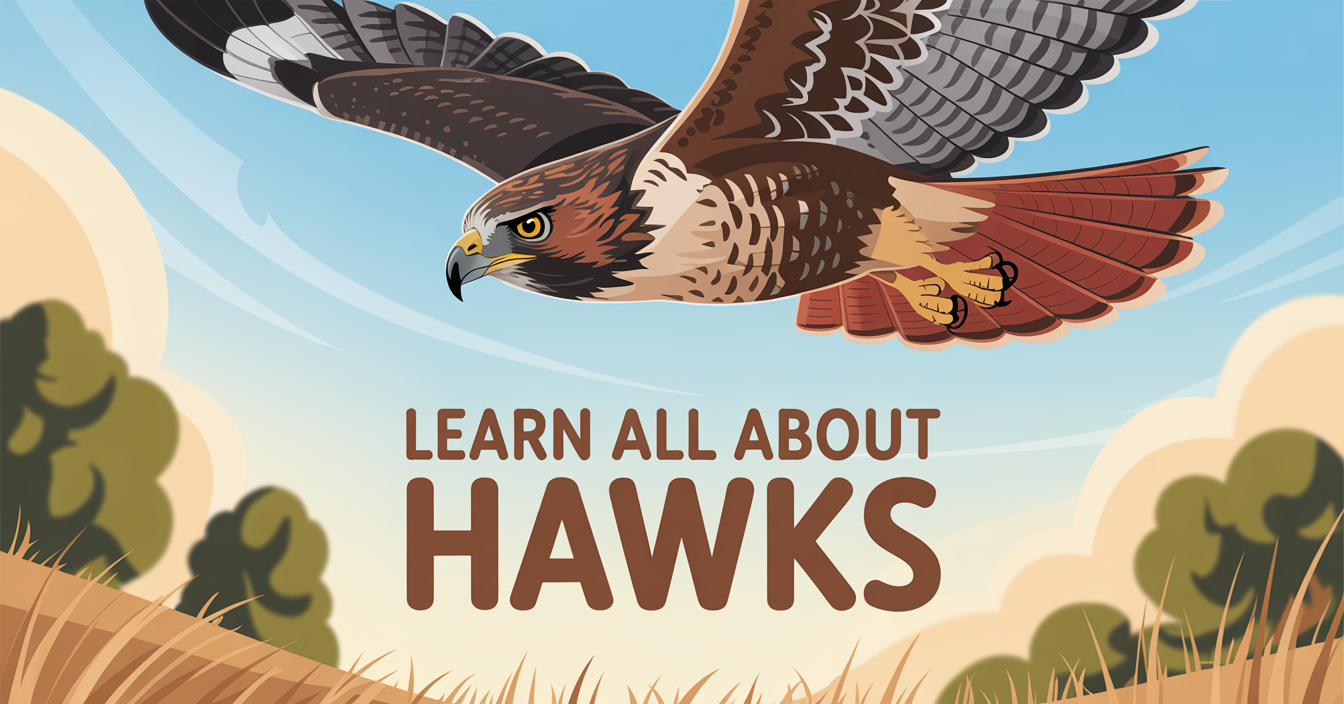
How Hawks See the World: Behavior, Biology, and Backyard Encounters
If you’ve ever paused mid-walk to watch a hawk spiral on a thermal or rocket through the trees after a darting bird, you know the feeling: awe mixed with a million questions. I’ve spent years observing raptors in the field and at migration watch sites, and I still get that little jolt of excitement every time one slices across the sky. This guide is my best attempt at understanding hawks with you—what makes them tick, how to identify them, and how to live alongside them with respect and wonder.
By the end, you’ll not only be better at spotting and naming the hawks in your area, but you’ll also have a deeper sense of how essential they are to healthy ecosystems—and how your yard choices can help (or hinder) them. Let’s dive in.
What Makes a Hawk a Hawk?
Hawks are birds of prey in the family Accipitridae—relatives of eagles, kites, and harriers. In North America, we usually use “hawk” for two main groups:
– Buteos: Broad-winged, sturdy hawks that soar. Think Red-tailed Hawk and Red-shouldered Hawk.
– Accipiters: Forest specialists with short, rounded wings and long tails for maneuvering. Think Cooper’s Hawk and Sharp-shinned Hawk.
Falcons (like the Peregrine) are not hawks. They’re in a different family (Falconidae) and have a distinctive notched “tooth” on the bill. Hawks rely even more on powerful feet and talons to subdue prey.
I often hear folks lump hawks, owls, and falcons together, but a few field marks help:
– Hawks vs falcons: Falcons have pointed wings and a sleek, scythe-like profile. Hawks typically show broader wings (especially buteos) or a distinct long tail and rounded wing shape (accipiters).
– Hawks vs owls: Owls are mostly nocturnal with forward-facing eyes and facial discs; hawks are daytime hunters with more lateral eye placement and different flight styles.
If you want a broader bird backdrop as you learn, I recommend our all about birds guide: https://explorecritters.com/all-about-birds-facts-myths-and-feathered-surprises/
Vision and the Hunter’s Toolkit
Understanding hawks starts with their vision. Diurnal raptors have exceptional eyesight—roughly 2–3 times the visual acuity of humans—thanks to dense photoreceptor cells and specialized retinal structures. Many can perceive some ultraviolet wavelengths, which can enhance contrast and help detect subtle cues on the landscape.
They grip with astonishing force. The real “weapon” is the foot, especially the enlarged rear talon (hallux) used to pierce or pin prey. The beak is a finishing tool, not the primary one.
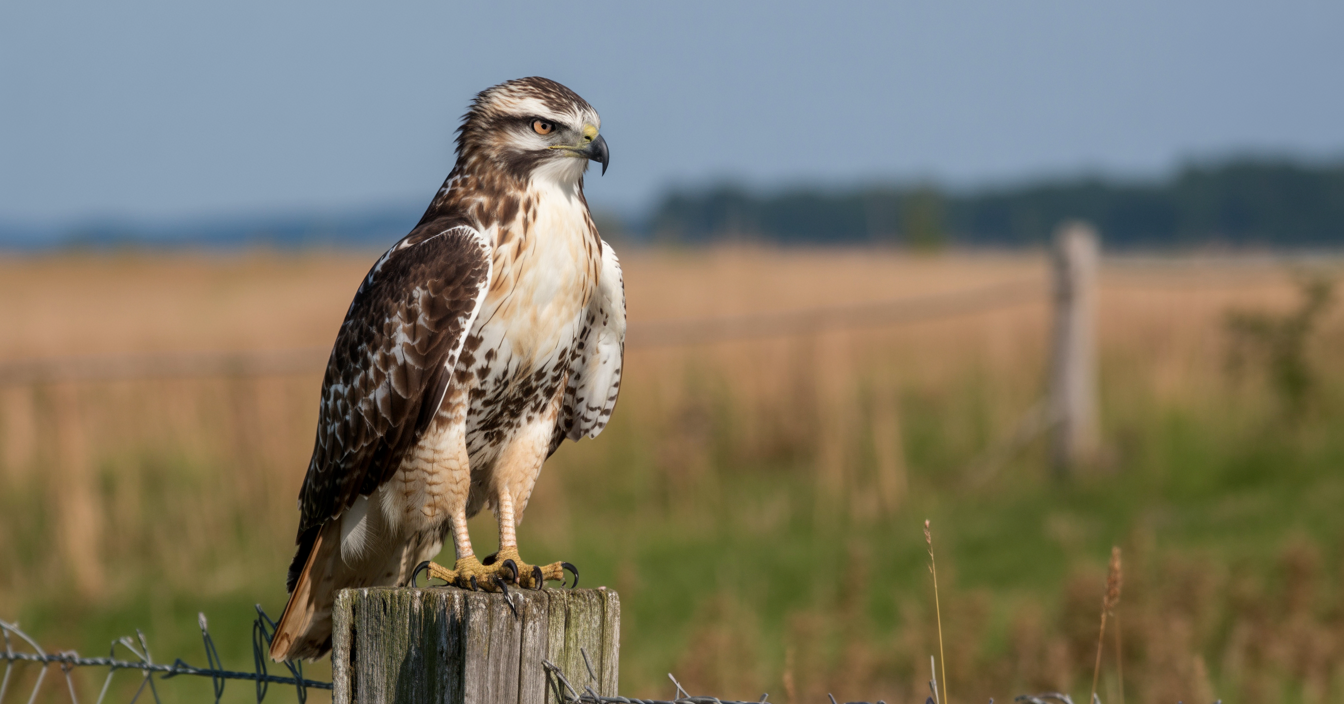
Field Guide to Common Hawks You’re Likely to See
Although hawks are diverse worldwide, these are the species most backyard naturalists in North America encounter.
Red-tailed Hawk (Buteo jamaicensis)
– Size: Large buteo; chunky body; broad wings.
– Tail: Brick-red in adults (juveniles have brown-banded tails).
– Flight style: Soaring with wings slightly raised; steady, unhurried beats.
– Habitat: Almost anywhere—fields, highways, suburbs, wood edges. True generalists.
– Sound: That classic raspy “scream” you hear in movies (often dubbed over eagles).
Tip: Watch highway poles and open fields. Red-tails often hunt rodents from a perch.
Red-shouldered Hawk (Buteo lineatus)
– Size: Medium buteo, slimmer than a Red-tail.
– Pattern: Rich, warm barring on the chest; checkered black-and-white wings in flight.
– Tail: Black with narrow white bands.
– Habitat: Moist forests, river corridors, wooded suburbs.
– Sound: A clear, repeated “kee-yer” that carries through woodlands.
Tip: If you’re near water and hear a bright, insistent call, look up—there’s a good chance a Red-shouldered is patrolling the canopy.
Cooper’s Hawk (Accipiter cooperii) vs. Sharp-shinned Hawk (Accipiter striatus)
These two can be tricky, but here are reliable pointers.
Cooper’s Hawk:
– Larger overall with a blockier head that juts beyond the wings in flight.
– Tail is rounded at the tip, often with a wider white terminal band.
– Legs are thicker (“cooper’s calves,” as some birders joke).
Sharp-shinned Hawk:
– Smaller, with a tiny, rounded head that barely protrudes in flight.
– Tail looks more squared off; narrower white tip.
– Legs are spindly and thin.
Both species have banded chests (juveniles are brown-streaked; adults show fine rufous barring) and both specialize in darting through trees to nab birds. If small songbirds at your feeder suddenly vanish and a silent shape streaks by, an accipiter is likely involved.
If raptors hook you like they did me, browse our hawk category for more species spotlights and tips: https://explorecritters.com/category/hawk
Northern Harrier (Circus hudsonius)
Technically a harrier, but often lumped into conversations about hawks:
– Look: Slim, long-tailed raptor with an owl-like facial disk and a bold white rump patch.
– Flight: Low, buoyant coursing over marshes and meadows.
– Sound: Generally quiet; the white rump is the giveaway.
Harriers hunt mostly by sound and sight, sweeping low over grasslands.
How Hawks Hunt and What They Eat
Hawks are opportunists. Their diet varies by species, season, and region, but a few patterns hold:
– Red-tailed Hawks: Small mammals (voles, mice, rats, rabbits), snakes, occasionally birds.
– Red-shouldered Hawks: Small mammals, frogs, snakes, crayfish (especially near water).
– Cooper’s and Sharp-shinned Hawks: Primarily birds—doves, starlings, sparrows, quail—caught with sudden, agile bursts.
– Harriers: Small mammals and birds in open country.
Hunting Styles
– Soaring and stooping: Buteos ride thermals, then drop on prey with a controlled dive.
– Perch-and-pounce: A favorite of Red-tails—scan from a pole or branch, then strike.
– Dash-and-grab: Accipiters explode through cover and weave between branches to surprise prey.
– Low coursing: Harriers skim vegetation, listening and watching for movement.
A quick myth-buster I always share: Hawks don’t hunt “for fun.” Every chase burns precious energy. They miss far more often than they succeed, so they focus on vulnerable, abundant prey—often the sick, young, or unwary. That natural selection pressure helps keep ecosystems balanced.
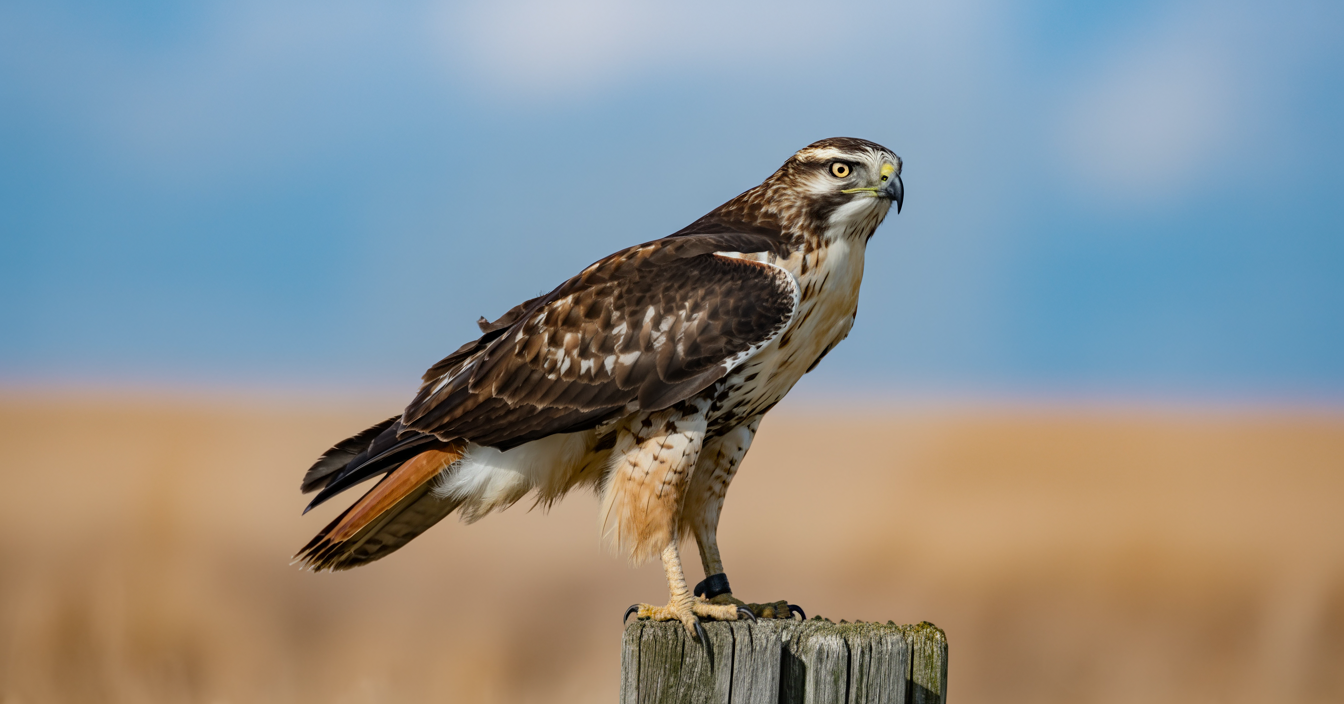
Understanding Hawks Around Your Home
If you love backyard birds, you’ll eventually attract hawks too. That’s not a failure—it’s a sign your yard is part of the food web. Still, there are smart ways to make your space both welcoming and safe.
Feeding Birds Without Creating a Hawk Buffet
– Give cover: Place feeders near dense shrubs or small trees so songbirds have escape routes.
– Clean seed hulls and spilled feed: That reduces rodent activity, which can draw larger hawks.
– Rotate feeder locations: Avoid creating a predictable ambush zone.
If you’re curious about creating a richer, safer yard, these backyard wildlife facts will help you see the bigger picture: https://explorecritters.com/backyard-wildlife-and-animal-facts-you-didnt-know/
Protecting Small Pets and Backyard Poultry
– Supervise tiny pets outdoors. Most hawks weigh 1–3 pounds and cannot carry off pets heavier than themselves, but small puppies, toy breeds, or free-ranging chicks can be vulnerable.
– Cover chicken runs with hardware cloth or netting. Hawks strike from above; overhead protection is key.
– Remove attractants: Open compost, unsecured trash, or rodent activity draws both prey and predators.
It’s worth noting: hawks are protected by law in the United States under the Migratory Bird Treaty Act. It’s illegal to harm them or disturb active nests. Prevention and smart yard design are the best tools.
Window Safety Saves Lives
Hawks, like many birds, can collide with windows when chasing prey. To help:
– Apply visible patterns on exterior glass using the 2×4 rule: lines or decals no more than 2 inches apart horizontally or 4 inches vertically.
– Reduce reflections with screens or external shades.
– Position feeders either very close to windows (within 3 feet, so birds can’t build up speed) or much farther away (over 30 feet).
Welcoming Birds Without Conflict
Part of understanding hawks is appreciating the whole bird community. If you’re building a bird-friendly yard:
– Add native plants for insects and shelter.
– Provide water with moving features (drippers or fountains).
– Keep cats indoors; outdoor cats kill billions of birds annually and can also injure hawks in tangled encounters.
Curious about popular feeder visitors and how to support them well? Learn more about hummingbirds: https://explorecritters.com/learn-more-about-hummingbirds/ and dive deeper into cardinals’ needs and diets: https://explorecritters.com/the-complete-guide-to-what-cardinals-eat-and-how-to-attract-them/
Myths and Facts: Getting It Right About Hawks
I’ve heard almost every hawk myth out there. Let’s clear a few up.
– “Hawks will carry away my 10-pound dog.”
Very unlikely. Most hawks weigh far less than that and can’t carry more than their own body weight for any distance. Supervise very small pets, but don’t fear for a medium dog around hawks.
– “Hawks target bird feeders, so I should stop feeding birds.”
Hawks occasionally hunt near feeders because prey gathers there. That’s nature at work. If a hawk starts frequenting your yard, pause feeding for a few days and give songbirds time to reset, or reposition feeders near cover.
– “Hawks attack people.”
Hawks virtually never attack humans except in rare cases when defending a nest at very close range. Give nest trees a wide berth during breeding season.
– “It’s fine to keep a hawk feather I found.”
In the U.S., hawk feathers, eggs, nests, and the birds themselves are protected. Possession without proper permits is illegal, even for naturally shed feathers.
If you enjoy raptors’ nighttime counterparts too, you’ll love this deep dive on owls and their silent hunting strategies: https://explorecritters.com/learn-all-about-owls-secrets-of-silent-night-hunters/
Migration Magic: Kettles, Flyways, and When to Watch
Some hawks are year-round residents; others migrate—sometimes dramatically. Autumn brings some of my favorite spectacles:
– Kettling: On sunny fall days, rising warm air (thermals) carries hawks into spirals—“kettles”—that can include dozens or even hundreds of birds saving energy as they drift south.
– Flyways: Ridges and coastlines funnel migrants. Classic watch sites—like Hawk Mountain in Pennsylvania or coastal points on the Great Lakes—offer incredible counts.
When to watch:
– Fall (September–November) is prime for many species.
– Spring (March–May) also brings movement north, though often less concentrated.
– Midday often yields the best thermal activity, especially after cool nights.
What to bring:
– Binoculars (8x or 10x), a field guide, sun protection, and layers.
– A notebook or phone app to log sightings (eBird is a popular community-science platform).
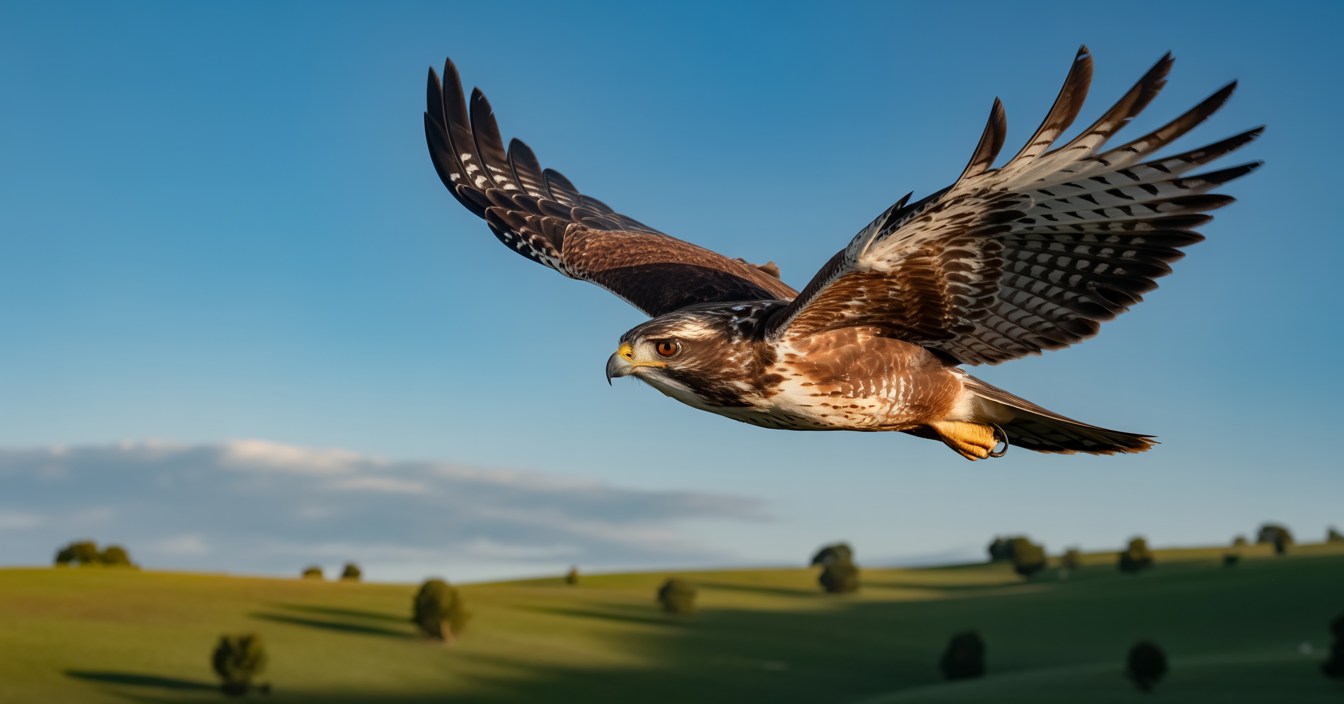
Conservation: How Your Choices Help Hawks
Raptors bounced back from the DDT era, but they face modern threats we can influence.
Rodenticides and Secondary Poisoning
Second-generation anticoagulant rodenticides (SGARs) can kill hawks that eat poisoned rodents. Better options:
– Seal entry points and remove food sources to prevent infestations.
– Use snap traps inside sealed boxes.
– Employ integrated pest management before any chemical control.
Collisions and Entanglements
– Windows: Apply visible patterns using the 2×4 spacing guideline.
– Power lines and fencing: Keep yards clear of loose wire, twine, or netting that can entangle birds.
Habitat and Community Support
– Grow native trees and shrubs to support prey populations and healthy ecosystems.
– Maintain some tall trees if safe—hawks need perch and nest sites.
– Support local raptor centers and hawk watches; they rehabilitate injured birds and educate communities.
If hawks have sparked your curiosity about our continent’s broader wildlife, explore these highlights: https://explorecritters.com/animals-of-africa-discover-the-amazing-wildlife-across-the-continent/ and our regional guides in the wildlife categories across the site. You can also continue your raptor journey in our hawk section: https://explorecritters.com/category/hawk
Identification Tips You Can Use Today
A few quick habits will boost your ID skills fast.
– Start with shape and flight style:
– Broad, steady soar with wide wings? Likely a buteo.
– Long tail, flap-flap-glide with quick, snappy wingbeats? Accipiter.
– Low and buoyant with a white rump patch? Northern Harrier.
– Check tail and head:
– Rounded tail with bold white tip and a large, protruding head in flight? Cooper’s Hawk.
– Squared tail and tiny head? Sharp-shinned Hawk.
– Brick-red tail (adult), dark “belly band,” and pale chest? Red-tailed Hawk.
– Listen:
– Movie “eagle scream”? That’s probably a Red-tailed Hawk.
– Clear repeated “kee-yer” in woodlands? Red-shouldered Hawk.
– Mind the season:
– Fall brings migrants; spring brings courtship flights and territorial displays.
– Juveniles in late summer and fall often show streakier, browner plumage.
Frequently Asked Questions
Do hawks migrate?
Many do, especially in northern populations. Broad-winged Hawks are famous for dramatic migration kettles in fall. Others, like many Red-tailed Hawks, can be year-round residents depending on climate and food availability.
What does “kettling” mean?
It’s the spiral formation hawks use to ride thermals. From a distance, the circling birds resemble bubbles in a boiling kettle.
Are hawks endangered?
Most common North American hawks are not currently endangered. Conservation status varies by species and region, so always check local lists. Habitat protection and rodenticide reduction remain important.
How can I tell a juvenile Red-tailed Hawk from an adult?
Juveniles lack the red tail; instead, they show brown-banded tails and more streaking on the chest. Adults have the iconic red tail and often display a pale chest with a dark belly band.
Is it okay to feed hawks?
No. Feeding or baiting hawks is not recommended and may be illegal in some areas. It can create dependence, increase disease risk, and alter natural behaviors. Support them indirectly by maintaining healthy habitats and avoiding poisons.
Why Understanding Hawks Enriches Everyday Nature
The more time I spend understanding hawks, the more I notice how they stitch a landscape together. A lone Red-tail on a fencepost hints at healthy grasslands and rodent cycles. A Cooper’s Hawk flash across a yard reveals the hidden drama around your feeders. A harrier cruising a marsh tells you the wetland is alive.
When we learn to see as they do—patiently, attentively—we notice more. We also make better choices for wildlife, from how we manage pests to how we place a feeder. If you’re eager to keep exploring, wander through our broader birding content and raptor stories here: https://explorecritters.com/all-about-birds-facts-myths-and-feathered-surprises/ and dig into our complete hawk collection: https://explorecritters.com/category/hawk
And if night skies call to you too, spend some time with their nocturnal cousins: https://explorecritters.com/learn-all-about-owls-secrets-of-silent-night-hunters/
Thanks for sharing the sky with me today. I hope your next encounter—whether it’s a hawk kettling overhead or a quick accipiter dash through the maples—lands a little deeper now that we’re understanding hawks together.