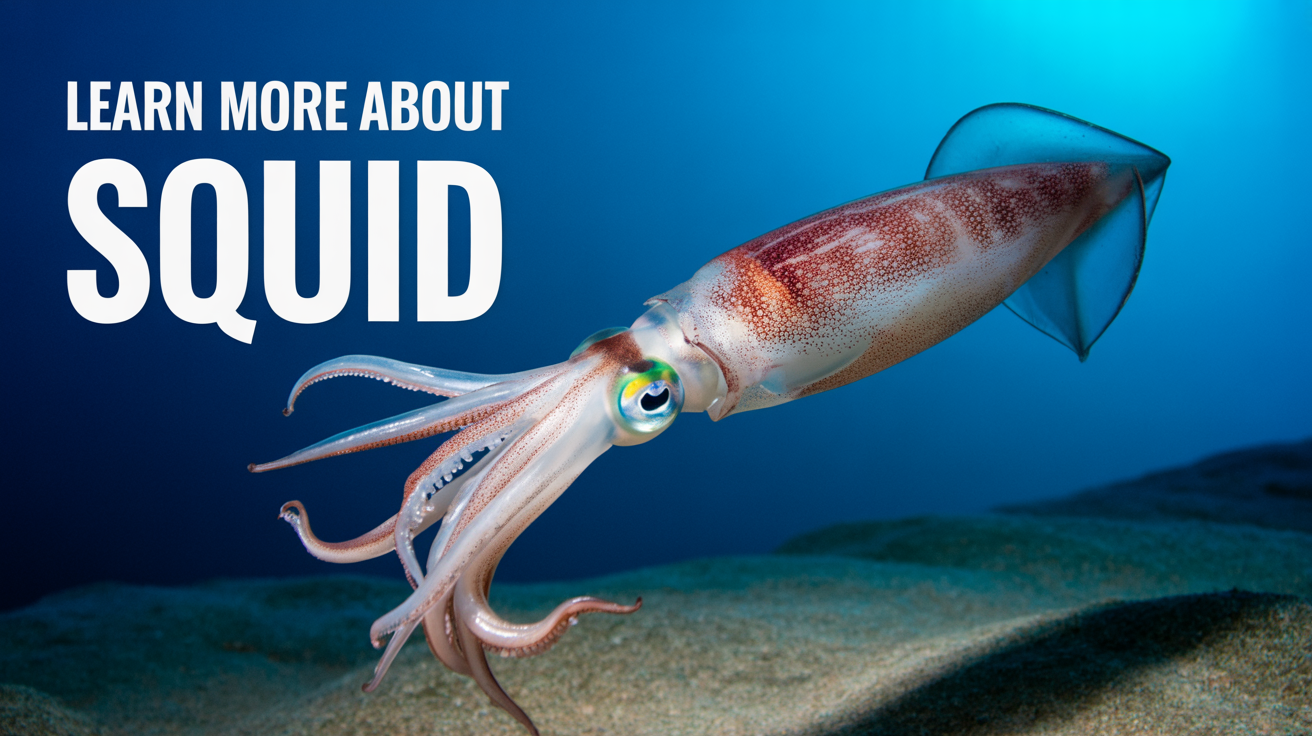
A Personal Dive Into the Lives of Squid
If you’ve ever watched a squid flash from translucent to tiger-striped in a blink, you know there’s magic in the ocean. I’ve spent years peering into tide, twilight, and deep-dark waters, and the more time I spend exploring squid, the more I’m convinced they’re some of the most extraordinary animals on Earth. They’re engineers of jet propulsion, artists of camouflage, and pivotal players in the global food web. Let’s wade in together—curious, careful, and full of wonder.
Exploring Squid Basics: What They Are and Why They Matter
Squid are cephalopods, close kin to octopuses and cuttlefish. They vary from thumb-sized bobtails to giants long as a school bus, occupying waters from sunlit coasts to inky abyssal plains. When we start exploring squid with care, we quickly discover how finely tuned they are to life in motion.
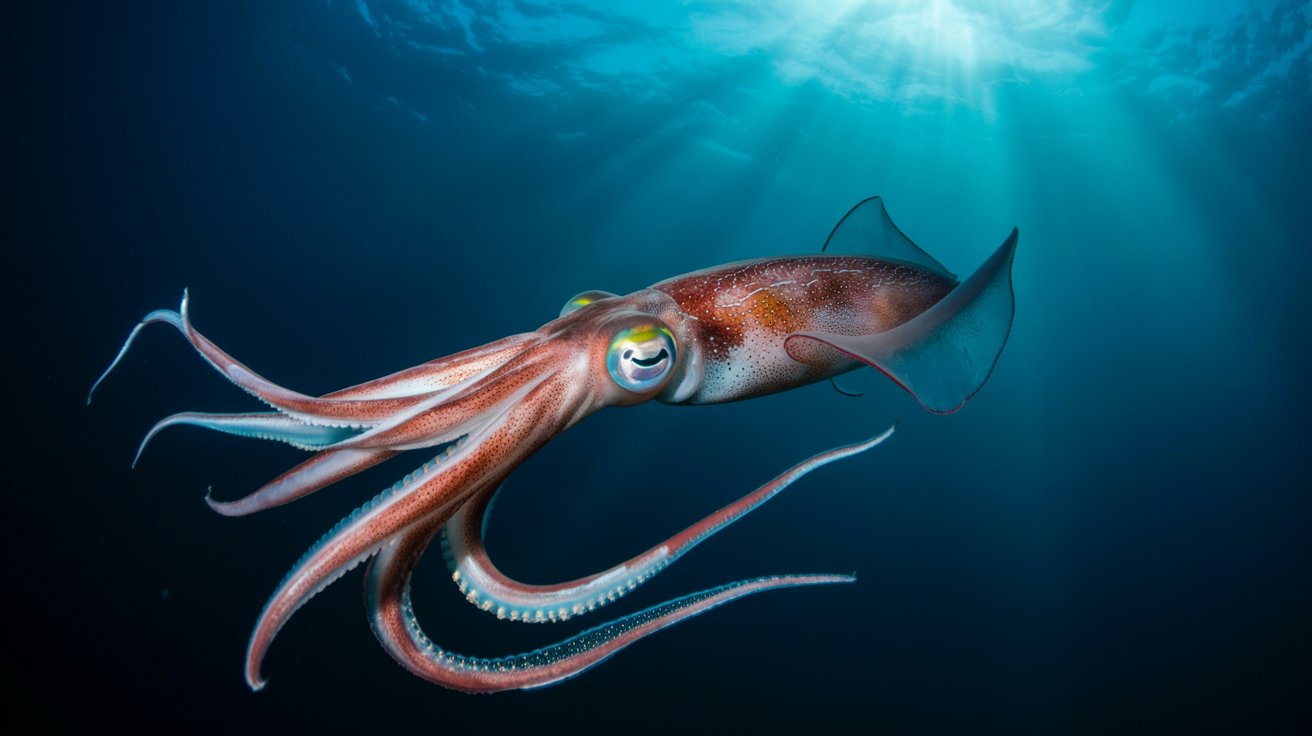
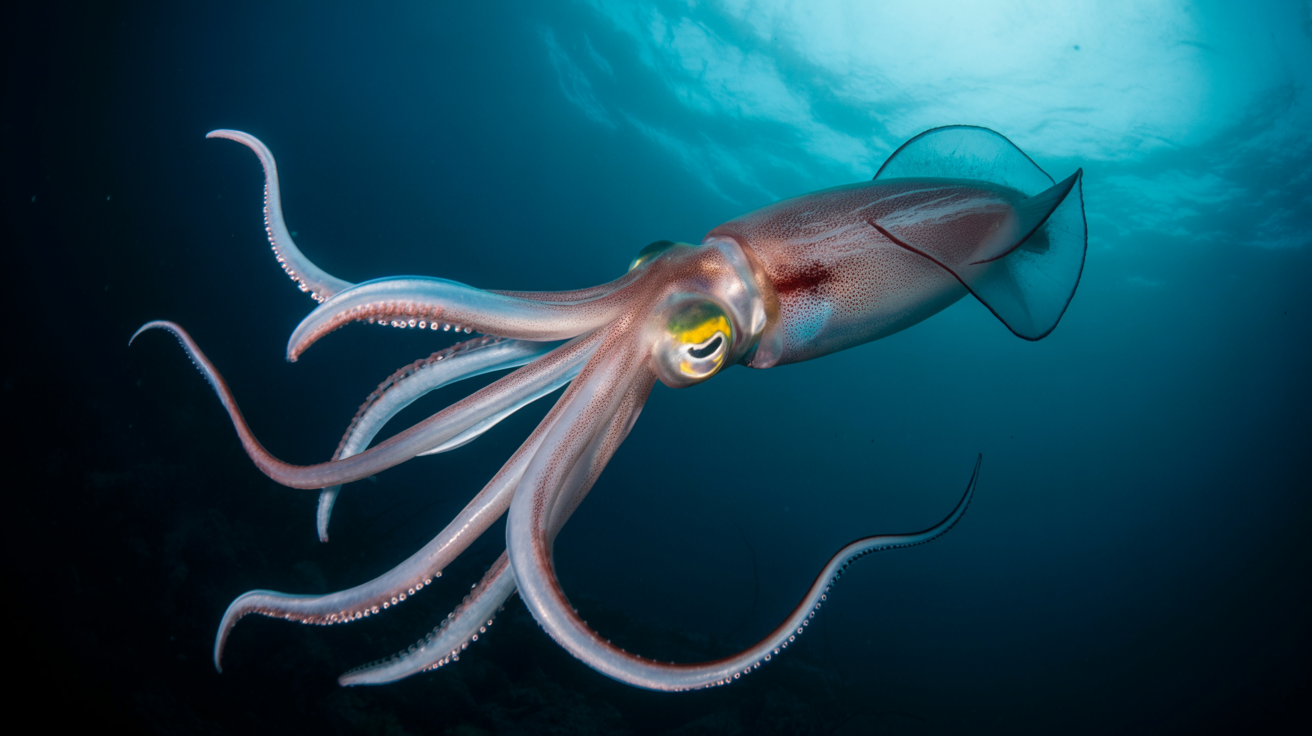
– Arms and tentacles: Most squid have eight arms and two longer feeding tentacles tipped with suckers or hooks for snaring prey.
– Three hearts and blue blood: Two hearts pump blood to the gills while one drives oxygen-rich blood to the body. Their copper-based blood pigment (hemocyanin) makes it blue.
– Jet propulsion: They draw water into the mantle and force it out through a siphon, zipping away in bursts of speed.
– The “pen”: An internal, feather-like support (the gladius) adds structure without sacrificing agility.
– Beak and radula: A sharp, parrot-like beak cuts prey; a rasping tongue (radula) shreds it.
Curious to compare their cephalopod cousins? You can explore our guides on octopus to see how solitary den-builders differ from these open-water sprinters.
The Shape of a Swift Swimmer
Squid are hydrodynamic—streamlined mantles, stabilizing fins, and that directional siphon all feed their life on the move. Many species join the nightly vertical migration, rising toward the surface to feed under the safety of darkness and sinking again at dawn. This daily commuting helps shuffle carbon through the water column, quietly wiring squid into global ocean chemistry.
Exploring Squid Camouflage and Communication
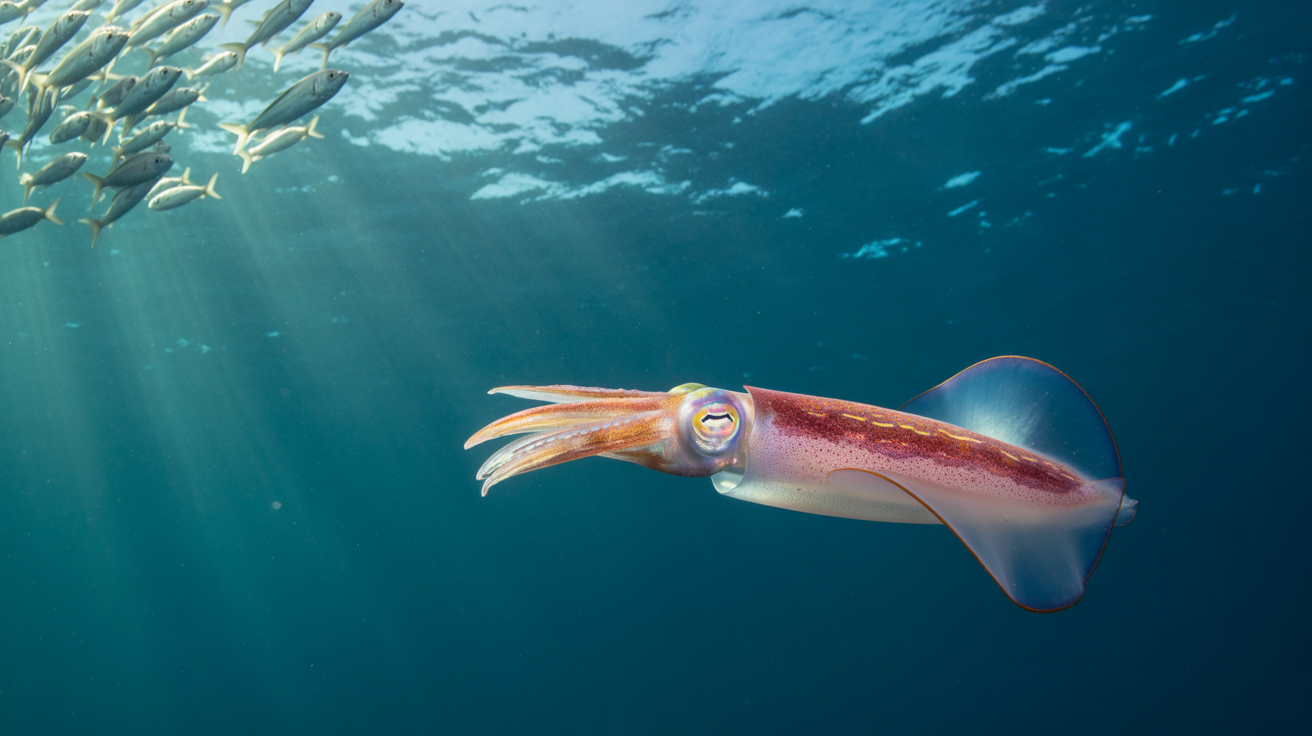
If there’s one trick that first made me fall in love with exploring squid, it’s their light show. Their skin is a living screen packed with:
– Chromatophores: Pigment sacs that expand and contract to create browns, reds, and yellows in milliseconds.
– Iridophores: Reflective cells that flash iridescent blues and greens.
– Leucophores: Light-scattering cells that help them match ambient brightness.
Squid likely don’t perceive color the way we do; instead, they excel at reading contrast and polarized light. Still, they can craft astonishing visual messages. I’ve watched individuals pulse patterns down their bodies like a waterfall—one side signaling “back off” to a rival while the other stays calm to a mate. That’s next-level multitasking.
Bioluminescence adds another spark. Some squid glow via chemical light, while others team up with bacterial partners. A classic is the Hawaiian bobtail squid, which hosts luminous bacteria in a special light organ. That glow helps it blend with moonlit surface waters from below—a stealth trick called counter-illumination.
– Camouflage benefits: escape from predators, sneak attacks on prey, courtship, and intra-species communication.
– Light limitations: in deep water, red wavelengths vanish first; many squid leverage this by showing red in depths where it appears near black.
For more ocean neighbors who dazzle with light and stealth, browse our pages on jellyfish and elegant rays.
Diet, Predators, and Food Webs
Exploring squid means following the energy: who they eat and who eats them.
What squid eat:
– Small fish, krill, shrimp, and other squid (yes, cannibalism happens)
– Opportunistic prey grabbed by lightning-fast tentacles
– Mid-water species often hunt in the deep scattering layer at night
Who eats squid:
– Sperm whales and beaked whales
– Tuna, billfish, and large sharks
– Seals, sea lions, seabirds
– Even bigger squid
Squid are the beating heart of many marine food webs. In some regions, they’re more vital than fish, shuttling nutrients from surface to deep and back again as they migrate. When we protect squid habitat, we safeguard entire ocean neighborhoods.
Exploring Squid Giants: Giant vs. Colossal
Meet two legends of the deep that fuel my sense of wonder.
Giant squid (Architeuthis dux):
– Long, rope-like tentacles, serrated sucker rings
– Among the largest eyes on Earth—about the size of dinner plates
– Likely hunts in deep midwaters
– Eyewitness accounts are rare; most data come from stranded animals or deep cameras
Colossal squid (Mesonychoteuthis hamiltoni):
– Bulkier and heavier-bodied than giant squid
– Shorter arms and tentacles with rotating hooks—formidable tools
– Lives in the frigid Southern Ocean
If you’re captivated by these icy leviathans, dive deeper into the region’s wildlife with our feature on the animals of Antarctica. You can also explore more squid articles to keep the curiosity flowing.
Exploring Squid Life Cycle: From Egg to Ocean Voyager
Most squid are short-lived—many just one to two years. Their lifecycle moves quickly:
– Courtship and mating: Males transfer packets of sperm (spermatophores) to females. In some species, the placement is… creative.
– Egg masses: Females lay eggs in gelatinous clumps or strings, sometimes attaching them to the seafloor or floating them midwater.
– Paralarvae: Newly hatched squid aren’t miniature adults. They’re called paralarvae—tiny, translucent, and planktonic. They drift with currents, feeding and growing before taking on adult forms.
– A short, intense life: Many species are semelparous, reproducing once before dying. It’s a sprint, not a marathon, and it keeps squid populations fast and flexible in changing seas.
Exploring Squid Behavior and Intelligence
Octopuses get a lot of press for problem-solving, but squid are no slouches. They coordinate hunting, communicate with rapid skin signals, and make on-the-fly decisions in dynamic schools.
Notable behaviors:
– Rapid learning: Through experience, some species adjust tactics—when to charge, when to flash, when to fade.
– Social signaling: Patterns, postures, and body angles carry meaning in courtship and conflict.
– Group dynamics: Humboldt squid, for example, can coordinate in loose groups, which may help overwhelm prey.
Are squid as crafty as octopuses? Their smarts are tuned differently. Octopuses tend to be solitary puzzle-solvers; squid specialize in fast decisions amid moving crowds, using body language that changes in milliseconds. Both approaches are brilliant in their own right.
Exploring Squid and People: Food, Fisheries, and Conservation
If you’ve enjoyed calamari, you’ve enjoyed squid—usually species like European squid (Loligo vulgaris), common squid (Doryteuthis spp.), or shortfin squid (Illex spp.). Squid fisheries are crucial to coastal communities from the Mediterranean to the Pacific.
Smart choices matter:
– Jig fisheries: Often considered relatively selective, with lower bycatch than trawls.
– Sustainability: Management varies by region; look for certifications and catch methods that minimize habitat impact.
– Climate signals: As oceans warm and oxygen minimum zones shift, species like Humboldt squid have expanded ranges. This reshuffling affects ecosystems and fisheries; monitoring is essential.
A note on safety and ethics:
– Some species can nip or behave defensively, especially at night under bright lights. Divers should observe respectfully and avoid handling wildlife.
– Reducing light pollution at sea may help nocturnal species navigate and feed naturally.
If ocean giants fascinate you, wander through our overview of the leatherback turtle—giant of the ocean and see how another marine legend thrives on jellyfish.
How I Approach Exploring Squid in the Wild
Seeing squid in person can feel like spotting shooting stars underwater. A few practical notes from one ocean lover to another:
– Go at night: Many species feed near the surface after dusk. Charter operators in some regions offer responsible night dives or snorkeling.
– Use gentle lighting: Red filters and low-intensity lights reduce stress and preserve natural behavior.
– Be patient and still: Let the animals come to you. Jerky movements can send them jetting into the dark.
– Learn the seasons: Squid runs can be highly seasonal; local guides are invaluable.
– Respect the weather and currents: Safety first. Ocean conditions change fast.
Where might you spot them?
– Temperate bays during seasonal runs
– Upwelling zones where productivity is high
– Offshore seamounts and current lines that concentrate life
Common Myths I Hear While Exploring Squid
I love a good sea story, but facts are even better. Here are a few myths to retire:
– Myth: Squid are fish. Fact: They’re mollusks (cephalopods), closer to snails than to tuna.
– Myth: All squid are giant. Fact: Most are small; true giants are rare and deep-dwelling.
– Myth: Squid ink is poison. Fact: Ink confuses predators, creating a visual smokescreen (sometimes a mucus “pseudomorph” decoy). It’s not a toxin meant to kill.
– Myth: Squid see color like we do. Fact: Evidence suggests cephalopods rely on contrast and polarization rather than color vision similar to ours—yet they still craft astonishing color displays.
– Myth: Squid live forever in the deep. Fact: Most live fast and die young—often within a couple of years.
Field Notes: Anatomy Details That Always Amaze Me
When I’m knee-deep in exploring squid details, a few features always make me grin:
– The beak: Hidden inside a ring of arms, powerful enough to slice through hard-shelled prey.
– The siphon: Like a jet engine you can steer—squid can reverse direction instantly.
– The giant eye: Built for starlight. In the deep sea, detecting the faintest silhouette of a predator (like a sperm whale) can be the difference between living and becoming lunch.
– The flexible blueprint: From dagger-shaped fins on fast swimmers to broader fins on hovering species, squid body plans reflect lifestyles.
Why Exploring Squid Is More Than a Hobby
The more deeply I go into exploring squid, the more I see the ocean’s heartbeat. Squid knit ecosystems together—migrating, feeding, being fed upon, and shuttling energy up and down the water column. Their booms and busts ripple into fisheries, seabird colonies, marine mammals, and coastal livelihoods. Learning their rhythms makes us better stewards of the sea.
Quick Guide: Squid at a Glance
– Kingdom: Animalia; Phylum: Mollusca; Class: Cephalopoda
– Relatives: Octopuses, cuttlefish, nautiluses
– Arms/Tentacles: 8 arms + 2 specialized tentacles in most species
– Hearts: 3; Blood: Blue (hemocyanin)
– Lifespan: Often 1–2 years; some deep-sea species may live longer
– Defense: Camouflage, ink, speed, schooling
– Habitat: From coastal shallows to the deep sea, global distribution
Exploring Squid FAQs
Q: Do squid attack people?
A: Squid are not out to get us. Most are shy and skittish. A few larger species (like Humboldt squid) can be bold around lights and bait. Respect, distance, and proper guidance keep encounters safe and memorable.
Q: Are squid venomous?
A: Some squid produce venoms to subdue prey, but they are not typically dangerous to humans. Handling wild animals is never advised.
Q: What’s the difference between squid and octopus?
A: Body plan and lifestyle. Squid generally have a streamlined shape for open-water living, plus two extra feeding tentacles. Octopuses are usually benthic (seafloor) specialists with 8 arms, remarkable dexterity, and den-based lives. Explore more in our octopus section.
Q: How big do the largest squid get?
A: Giant squid can reach lengths over 12 meters (including tentacles). Colossal squid may be shorter but bulkier overall. Both rank among the largest invertebrates known.
Q: Why do squid die after breeding?
A: Many are semelparous—evolving to invest all at once into reproduction. In the ever-changing ocean, speed and fecundity can be an advantage.
Keep Learning With Related Ocean Creatures
Love exploring squid? The ocean is a web of wonders. Wander through:
– Our full library of squid articles for species spotlights and deep dives.
– Apex predator neighbors in sharks.
– Drifting marvels in jellyfish.
– Elegant flyers of the seafloor in rays.
– The frozen realm home to colossal squid in animals of Antarctica.
A Final Word From One Ocean Lover to Another
Exploring squid reminds me why I fell for wildlife in the first place. There’s grace in their speed, poetry in their color changes, and a quiet, essential hum to their role in the sea. When we make choices—what seafood to buy, how we treat our shores, which stories we share—we’re voting for the kind of ocean we want. I hope the next time you look out over dark water, you’ll imagine a flicker of iridescence below and feel that same spark I do: respect, curiosity, and joy.