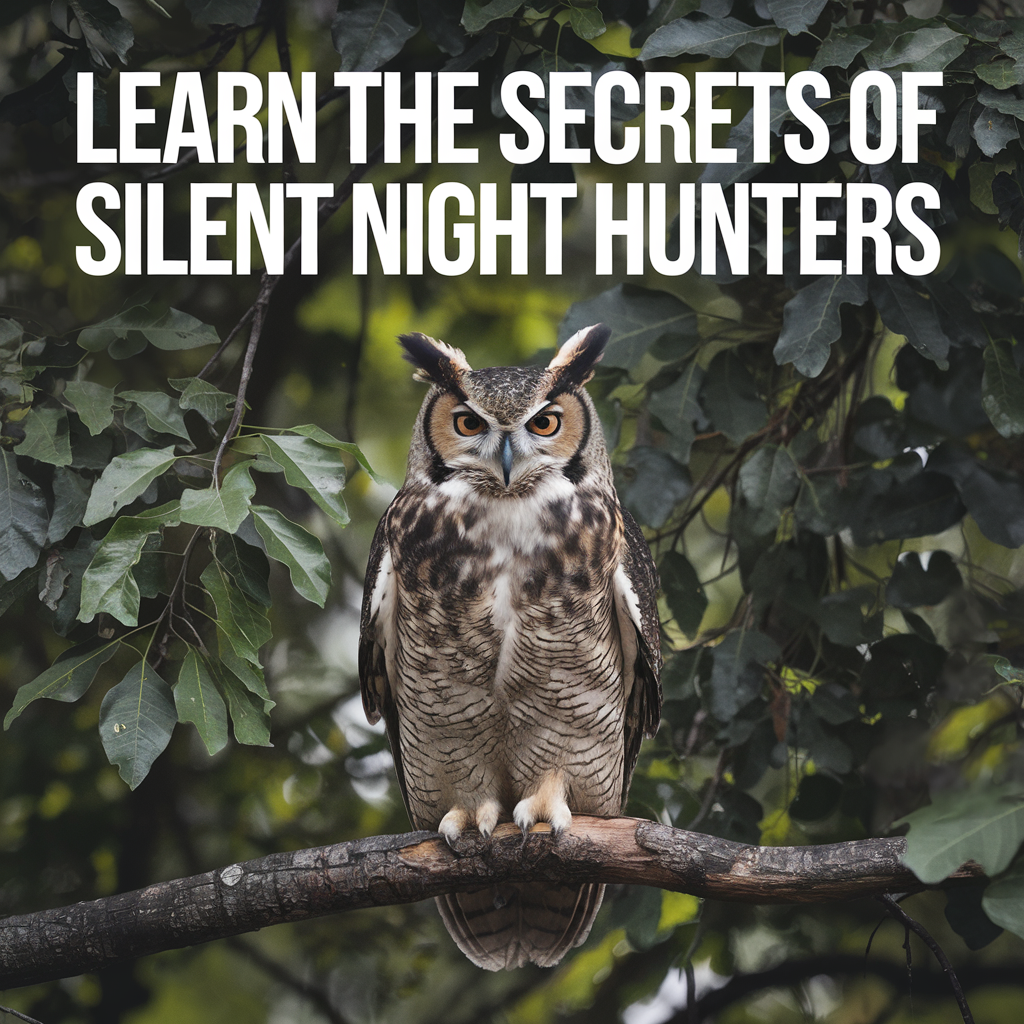
Step Into the Night: Meet the Feathered Hunters Hiding in Plain Sight
If you’ve ever paused under a moonlit oak and heard that deep, echoing “hoo-hoo,” you already know the thrill that nudges so many of us to learn all about owls. These birds are the quiet rulers of twilight—a blend of engineering, stealth, and mystery. I’ve spent countless evenings listening for their calls, scanning for silhouettes against the stars, and picking up the occasional pellet under a favorite perch. In this guide, I’ll share what I’ve learned so you can learn all about owls too—how they live, what makes them unique, and how to see them ethically right where you are.
What Makes an Owl an Owl? The Traits That Define a Nighttime Champion
Before you can learn all about owls in the field, it helps to know exactly what sets them apart from other birds. Owls belong to the order Strigiformes, divided into two families: Tytonidae (barn-owls like the ghostly Barn Owl, Tyto alba) and Strigidae (the “typical” owls, such as the Great Horned Owl and Barred Owl). Despite their diversity, they share some stunning adaptations.
Eyes Built for Dark: Seeing What We Miss
- Huge, forward-facing eyes provide binocular vision, giving owls precise depth perception for hunting in low light.
- Those eyes are tube-shaped and fixed in their sockets—so they turn the neck instead. With 14 neck vertebrae (humans have seven), many owls can rotate their heads about 270 degrees without cutting off blood flow to the brain.
- Owls pack their retinas with rod cells (the ones that excel in dim light), which is why they’re so effective at dawn, dusk, and night.
Ears You Can’t See, Power You Can Hear
- Many owls have asymmetrical ear openings—one higher than the other. That offset lets them pinpoint sounds in three dimensions.
- The facial disk (a rounded arrangement of feathers) acts like a satellite dish, funneling sound straight to the ears.
Silent Flight: The Sound of Almost Nothing
- Comb-like serrations on the leading edge of the wing break up air turbulence.
- Soft, velvety feathers dampen sound across the wing surface.
- Fringed trailing edges further reduce noise. The result isn’t magic—it’s smart aerodynamics that let owls approach prey with astonishing stealth.
If you’re brushing up on bird basics in general, you might like this overview that goes all about birds—it’s a friendly primer that makes the rest of this owl deep-dive even more fun.
Daily (and Nightly) Life: Behavior You’ll See When You Learn All About Owls
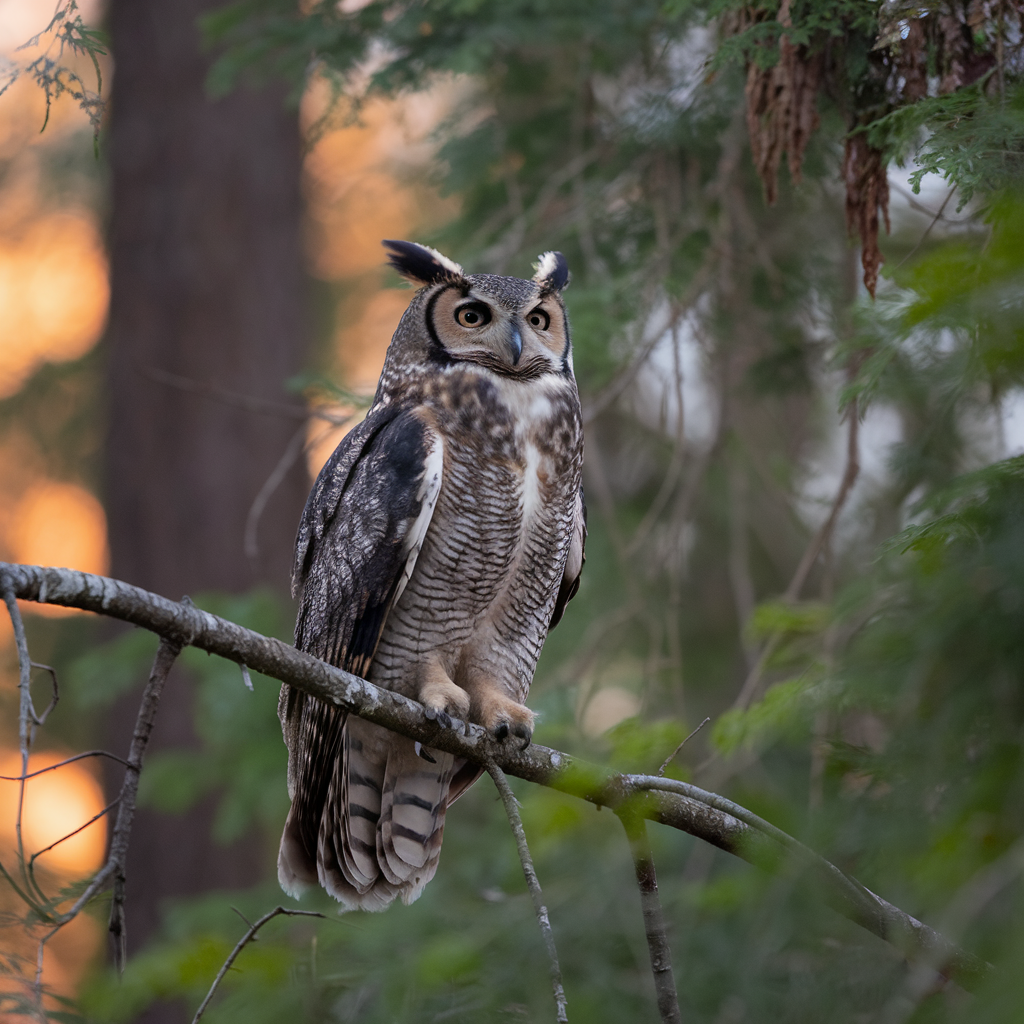
Most owls are nocturnal or crepuscular (active at dawn and dusk), but “mostly” is the key word. Snowy Owls often hunt in daylight, especially in the Arctic summer. Burrowing Owls are frequently seen in the daytime guarding their burrows. The Northern Hawk Owl can be diurnal too. Learning to read the times and places each species prefers is part of the joy when you learn all about owls.
Voices in the Dark: Calls and Communication
- Owls hoot, trill, screech, bark, and whistle. Those sounds stake out territory, attract mates, and keep family members connected.
- Different species have distinctive rhythms: Barred Owls ask, “Who cooks for you?”; Great Horned Owls resonate in low hoots; Eastern Screech-Owls let out haunting trills.
- Tip: If you’re out at night, the chorus often includes frogs. Learning who’s calling around you helps you place the owl’s voice in the soundscape. Here’s a helpful primer on identifying frog calls.
Diet and Hunting: Nature’s Rodent Control That Works While You Sleep
Owls are opportunistic hunters, and their menu changes by species and habitat. Common items include:
- Small mammals such as mice, voles, and rats (a favorite for many medium-sized owls)
- Insects, especially for smaller species (moths, beetles, crickets)
- Other birds, reptiles, amphibians, and even fish in some species
The owl’s digestive system compacts indigestible parts (fur, bones, insect shells) into pellets, which the bird later coughs up. Examining pellets is a classic way to learn all about owls without disturbing them—just be sure to use gloves and follow good hygiene.
One important plea from me to you: avoid second-generation rodenticides. Poisoned rodents often stagger in the open, becoming easy prey. The toxins move up the food chain and can kill the very predators that help keep rodent populations in check. Instead, fix the problem at the source—secure food and shelter that attract rodents, and consider mechanical traps where necessary. If you’re curious about how your whole yard fits into a bigger web of life, this guide to backyard wildlife is a great, practical read.
Want to geek out on fellow creatures of the night? You’ll love this deep dive all about bats—perfect companions to owls in the nocturnal shift.
From Egg to Expert Hunter: How Owls Raise the Next Generation
Most owls don’t build their own nests. They adapt—using tree cavities, cliffs, old stick nests left by hawks or crows, burrows (for Burrowing Owls), and even barns and silos.
- Clutches: Often 2–6 eggs, though it varies by species and food availability.
- Incubation: Usually the female incubates while the male delivers food.
- Hatching: Owlets are altricial (born helpless) and need weeks of feeding and protection.
- Branching: Young may leave the nest before they can fly, hopping among branches or walking on the ground while still being fed by parents.
Ethics note: Never approach an active nest. The risk of stress and nest abandonment is real. If you’re interested in helping owls, consider species-appropriate nest boxes placed with care. Screech-Owls and Barn Owls take readily to the right box in the right place—high up, with safe flight paths, and away from bright nighttime lighting.
Where to Find Owls: Habitats From Forests to Farmland
Owls live on every continent except Antarctica, from dense rainforests and alpine tundra to deserts, grasslands, and city parks. A few favorites:
- Barred Owl: Moist forests and swamps, often near water.
- Eastern Screech-Owl: Wooded suburbs, parks, and small forests—where mature trees mean cavities.
- Short-eared Owl: Open grasslands and marshes; often crepuscular and visible low over fields.
- Burrowing Owl: Open country with low vegetation; uses burrows made by mammals.
- Snowy Owl: Arctic tundra—and occasionally winter irruptions farther south.
- Pel’s Fishing Owl (Africa): Along rivers and lakes, taking fish and aquatic prey—learn more about its neighbors in this tour of the wildlife of Africa.
Owls skip Antarctica, but if polar nature fascinates you, here’s a terrific overview of the species that do call it home: Animals of Antarctica.
Learn All About Owls in Your Backyard—Safely and Ethically
If you want to learn all about owls close to home, start by thinking like a small mammal. Where are the brushy, weedy patches that hide mice and voles? Where are the old trees with cavities? Where are the quiet corners near water?
Field Tips to See, Not Disturb
- Look for signs: chalky white “wash” on a favorite perch, and pellets beneath.
- Listen just after sunset and before dawn. Mobbing birds (crows, jays, chickadees) often betray a roosting owl.
- Use dim, warm light or a headlamp with a red filter. Keep your distance, and never spotlight an owl for long.
- Playback etiquette: Go easy. Repeatedly playing calls can stress birds and interfere with breeding.
For daytime companions to your owl stakeout, get to know the common birds in your yard. Cardinals are unabashed charmers, and this guide to all about cardinals pairs nicely with owl-watching since they’ll often scold a perched owl. And for a completely different style of flight and feeding, hummingbirds are a joy during daylight hours.
Want more resources to expand your journey? Explore our broader library of birds and dive into dedicated owl articles any time.
Owls and the Neighborhood Food Web: Connected to More Than You Think
When you learn all about owls, you also learn about the creatures they influence—and those that influence them.
- Small mammals: Voles and mice are primary prey. Managing habitat (tall grass edges, brushy margins) can boost natural rodent control by supporting owls.
- Rabbits and squirrels: Larger owls like Great Horned Owls may take young rabbits and the occasional unwary squirrel. Read more on our rabbit and squirrel pages to understand how they fit in.
- Snakes and amphibians: Some owls take snakes and frogs; others coexist while hunting different prey. Learn more about our scaled neighbors in the snake category and about amphibian ecology through resources like the frog calls guide.
- Beavers and wetlands: Water-loving owls hunt along rivers and marshes that beavers help create. For a fascinating systems view, check out our feature on beavers, the watershed engineers.
If you’re working toward a peaceful backyard, I love this perspective on respecting wildlife homes. It’s a gentle guide to sharing space with the animals around us.
Myths, Misconceptions, and Wow-Facts: Clearing the Air
- Myth: Owls can turn their heads all the way around. Fact: They can rotate about 270 degrees—impressive, but not 360.
- Myth: Owls are “wise.” Fact: They’re brilliantly adapted predators, but their brain-to-body ratio isn’t unusually large for birds. “Wisdom” is more a cultural symbol than a biological trait.
- Myth: Owls are blind in daylight. Fact: They see just fine during the day; their pupils constrict to protect those sensitive retinas.
- Myth: All owls hoot. Fact: Many hoot, but others trill, bark, whistle, or screech—especially the smaller species.
- Wow-Fact: Great Horned Owls are apex predators in many habitats. They can take skunks (their weak sense of smell helps) and even other raptors.
To keep sharpening your myth-busting skills, browse our wildlife library—there’s a lot more to discover, from bats to backyard birds, when you’re on a mission to learn all about owls and their world.
Conservation Status: Real Challenges, Real Solutions
Owls face a familiar list of threats—and every solution we put into action helps.
- Habitat loss: Removing old trees, snag-free “tidy” yards, and vanishing grasslands mean fewer cavities and less prey. Keep a snag (standing dead tree) if it’s safe, and let edges grow a bit wild.
- Rodenticides: Secondary poisoning remains a major issue. Choose prevention and mechanical control over poisons.
- Vehicle collisions: Roadside hunting puts owls in danger, especially after dusk. Reducing roadside litter (which attracts rodents) can reduce risk.
- Window strikes and light pollution: Use window decals or screens, and minimize bright outdoor lighting—especially near known hunting perches.
- Climate impacts: Changing snow cover and prey cycles can affect species like Snowy Owls.
Legal note: In many countries (including the U.S.), most owls are protected by law. It’s illegal to possess feathers or disturb active nests without permits. Observe, enjoy, photograph—then let them get back to the night shift.
Learn All About Owls: A Quick Field Guide to 10 Species
Use this mini-guide as a springboard to your own local checklist:
- Barn Owl (Tyto alba): Heart-shaped face, pale underparts, ghostly flight. Hunts open fields for rodents. Often uses barns and nest boxes.
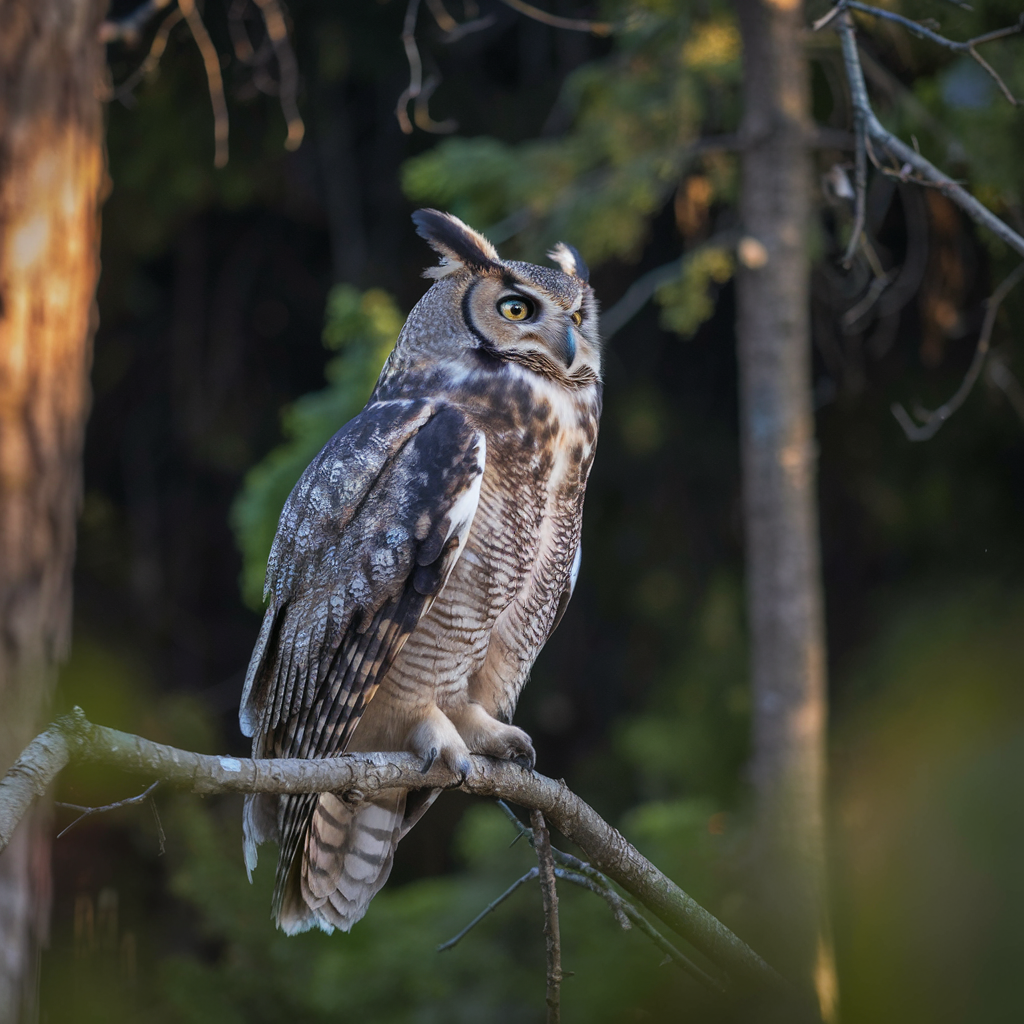
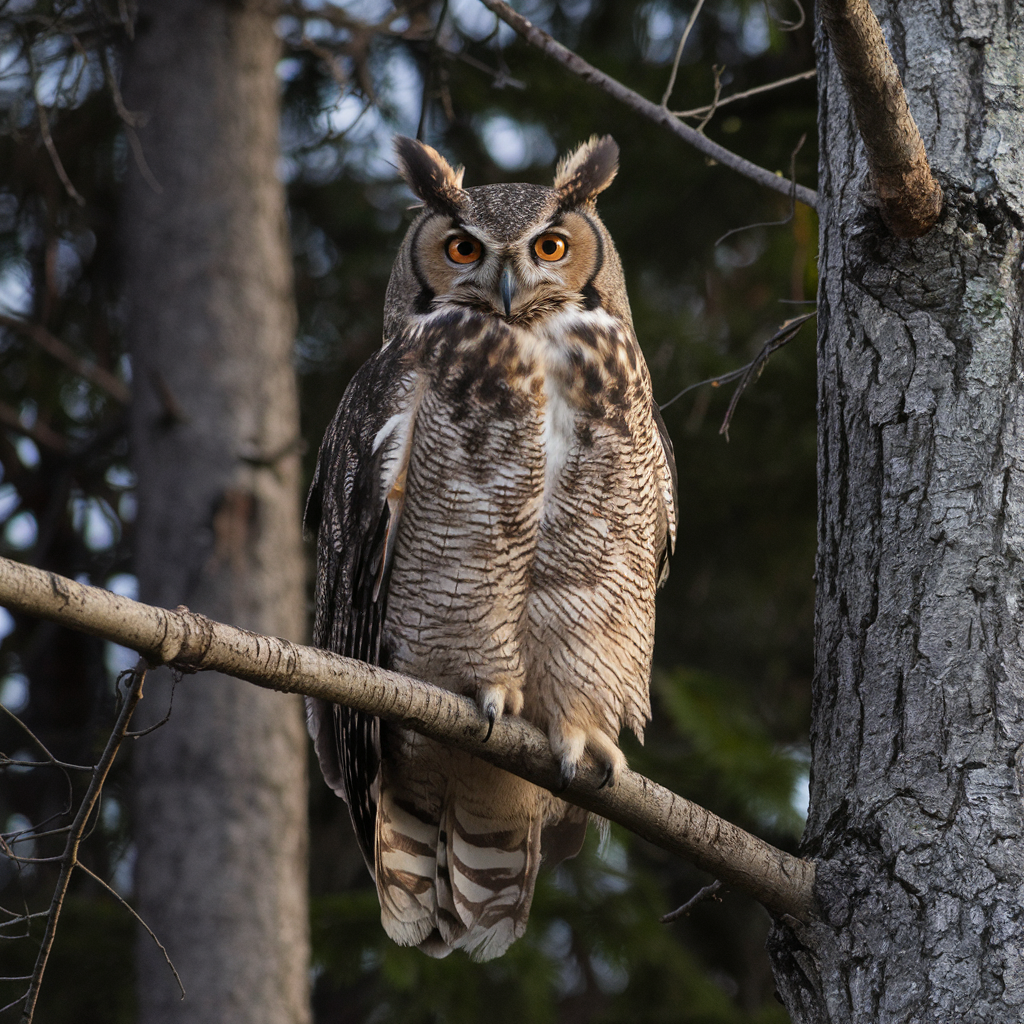
- Great Horned Owl (Bubo virginianus): Big, with ear tufts and a deep hoot. A versatile predator found from forests to suburbs.
- Barred Owl (Strix varia): “Who cooks for you?” Loves mature woods, often near water. Round face, no ear tufts.
- Eastern Screech-Owl (Megascops asio): Small, with ear tufts. Red or gray morph. Trills rather than hoots; loves cavities and nest boxes.
- Northern Saw-whet Owl (Aegolius acadicus): Tiny, endearing, and more common than most people realize. Listen for the tooting call at night.
- Short-eared Owl (Asio flammeus): Long-winged, buoyant flight over open fields; often crepuscular. Ear tufts are short and usually not visible.
- Long-eared Owl (Asio otus): Slim body with tall ear tufts. Roosts in dense conifers; hunts grasslands at night.
- Snowy Owl (Bubo scandiacus): Arctic specialist. Thick white plumage; sometimes ventures south in winter during prey shortages.
- Burrowing Owl (Athene cunicularia): Day-active, long legs, lives in burrows on open ground. Charismatic and easy to watch from a distance.
- Eurasian Eagle-Owl (Bubo bubo): One of the world’s largest owls, with powerful talons and striking orange eyes.
Curious about how diurnal birds contrast with owls? Spend a weekend getting to know cardinals and hummingbirds—it’ll sharpen your eye for what makes owls so special when dusk settles.
How to Learn All About Owls in One Season: A Simple Plan
- Week 1–2: Listen—Head outside 30 minutes after sunset. Learn your local owl calls. Keep notes.
- Week 3–4: Look for signs—Scout favorite perches, look for pellets and whitewash. Try to find a roost site without getting too close.
- Week 5–6: Observe quietly—Watch for hunting flights along field edges. Keep lights low, voices lower.
- Week 7–8: Habitat help—Add brush piles, protect cavities, and consider a species-appropriate nest box. Ditch rodenticides.
- Ongoing—Read, compare notes, and explore related wildlife topics. Our owl articles and broader birds library are updated regularly with practical tips and true stories from the field.
Final Thoughts: Wonder, Respect, and the Joy of Noticing
I still get a jolt of awe when a shadow lifts from a fencepost and dissolves into the night. Learning to notice—that’s the real secret when you set out to learn all about owls. The more we pay attention, the more the living world reveals: the rustle of vole trails, the chorus of frogs, the scolding of jays, the hush of wings over a moonlit field.
Follow your curiosity. Start at your doorstep, then branch out. When you’re ready for your next rabbit hole (pun happily intended), try our guides to rabbits, dive into the broader world of birds, or simply keep exploring the night—because the best way to learn all about owls is to share a little darkness with them and listen.