What Even Is an Opossum, Anyway?
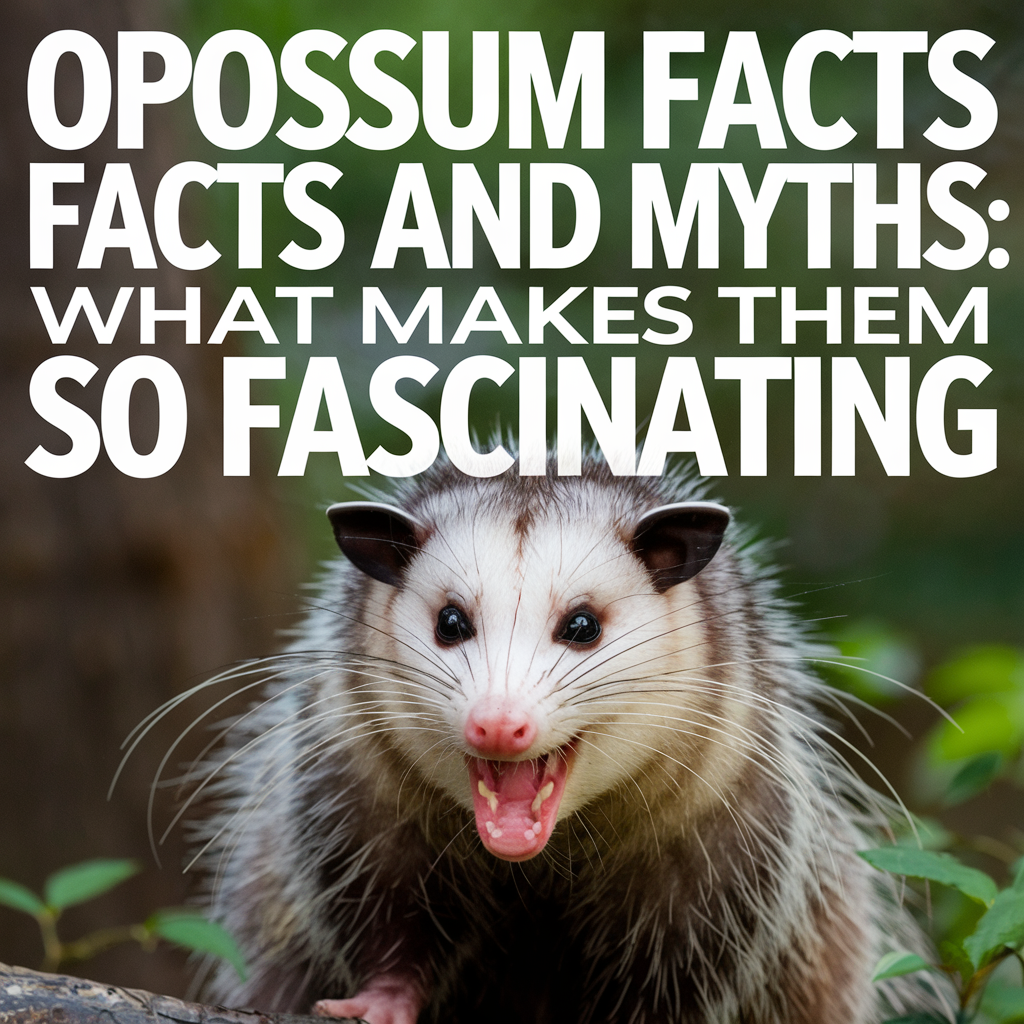
If you’re like me, you’ve probably seen a weird little creature with beady eyes, a long snout, and a naked tail creeping through your backyard at night—and wondered, “What even is that thing?”
Well, that little guy is likely a Virginia opossum, the only marsupial native to the United States and Canada. Yep, they’re marsupials, just like kangaroos and koalas, which means they carry their babies in a pouch. Pretty wild, right?
One of the most common opossum facts that trips people up is the name itself. Many folks say “possum” when they’re actually talking about an opossum. While both names get thrown around, possums are actually a different group of animals native to Australia. Our backyard critters here in the U.S. are opossums—with an “O.”
If you’re reading this on a site called Explore Critters, I’m guessing you’re not just asking what an opossum is, but why they’re so dang weird, helpful, and misunderstood. And that’s what we’re diving into.
Where Do Opossums Live in the Wild?
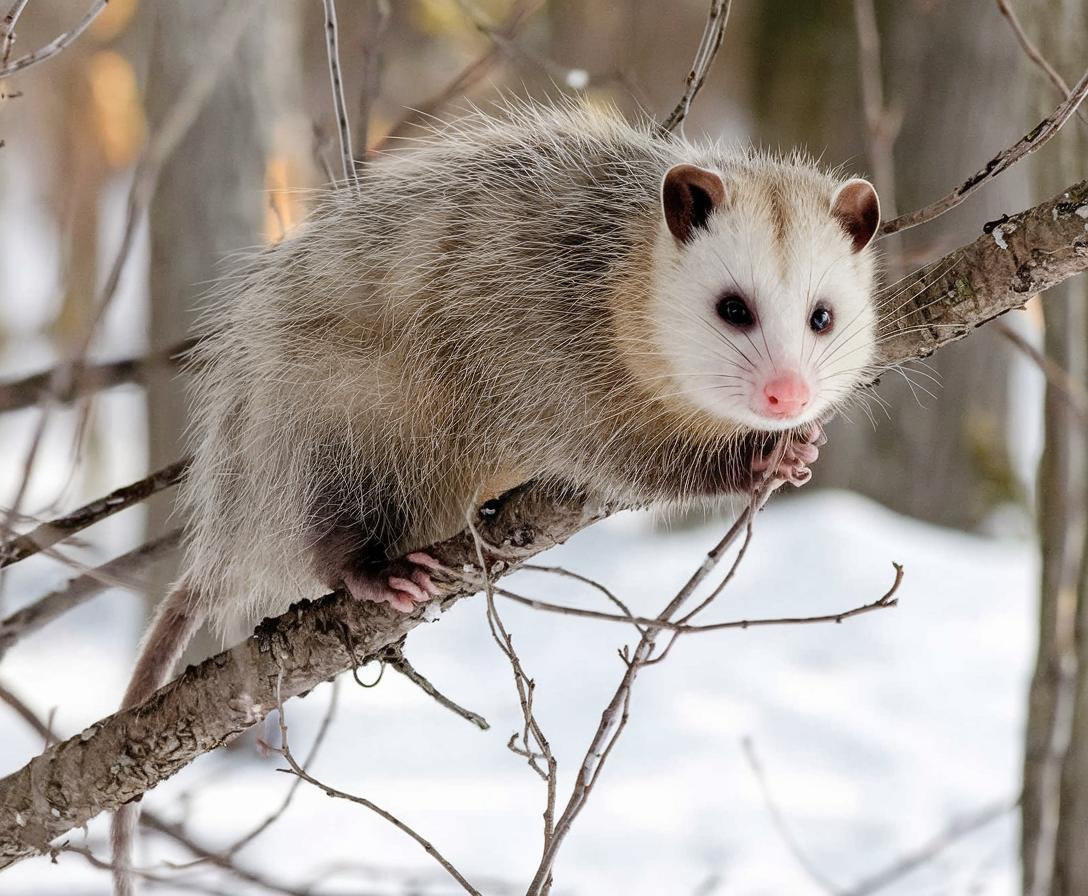
I used to think opossums only lived in the woods—and maybe under a few porches. Turns out, these little guys are survival champions and can live just about anywhere.
Opossums naturally prefer forests, woodlands, and areas near water, but as humans keep spreading out, they’ve adapted to live right alongside us. You’ll find them in cities, suburbs, farmland—you name it. Their homes are often dens they take over from other animals (like raccoons or groundhogs), tree hollows, brush piles, attics, or even the crawl space under your shed.
One of the coolest opossum facts I’ve learned is how they don’t bother building their own dens. Instead, they’re total squatters. They just move into whatever cozy spot they find. No shame in their game.
And because they’re nocturnal, most of us never see them during the day. But that doesn’t mean they’re not around. If you ever see overturned trash cans, paw prints in the mud, or hear odd rustling at night—there’s a good chance a curious opossum was paying you a visit.
What Do Opossums Eat? (It’s Not What You Think)
If you think opossums just dumpster dive for leftovers, you’re missing some of the most interesting opossum facts out there. These little guys are omnivores, and honestly, they eat better than some of us do.
Their diet includes:
- Insects like beetles, roaches, and crickets
- Slugs and snails (your garden’s best friend)
- Fruits, berries, and even fallen apples
- Frogs, small rodents, and snakes (yes, snakes!)
- Carrion—dead animals, including roadkill
That last one is what gives them the whole “gross scavenger” reputation. But the truth is, opossums are nature’s clean-up crew, and we’re lucky to have them. They reduce pests, keep disease spread down, and even eat thousands of ticks—some estimates say a single opossum can eat 5,000+ ticks in a season.
If you’re into gardening, wildlife, or just keeping nature in balance, understanding what opossums eat is key to realizing they’re actually doing us a favor. I used to shoo them away from my compost pile—now I just nod and let them work.
No, They’re Not Rabid: Opossum and Disease Myths
Let’s clear something up: opossums almost never carry rabies. That’s one of the most misunderstood opossum facts out there, and it drives me nuts how many people still believe it.
Why? Because opossums have lower body temperatures than most mammals. Rabies has a hard time surviving in their system, so even if they’re acting weird or hissing at you, it’s not because they’re rabid. That’s just their bluff.
Their hissy fits, drooling, and nasty expressions are all defense tactics to scare you away. And honestly, if I were small, slow-moving, and regularly accused of being diseased, I’d probably throw a fit too.
It’s also worth noting that opossums groom themselves constantly—kind of like cats—and don’t carry nearly as many fleas or parasites as people think. In fact, they often help by reducing disease-spreading pests in the environment.
So no, that opossum in your backyard isn’t rabid—it’s just misunderstood.
The Truth About That Whole ‘Playing Dead’ Thing
I used to think opossums pretended to play dead when they were scared. But one of the most fascinating opossum facts I’ve learned? They’re not acting—it’s an involuntary response, like fainting from pure panic.
This behavior is called “thanatosis,” and when it kicks in, the opossum collapses, stiffens up, drools, and even releases a foul-smelling liquid from its backside to mimic the scent of a decaying animal. Sounds dramatic, but it actually works. Most predators want a live meal, not something that smells like it’s been dead for days.
What’s wild is they can stay in this state for up to four hours, and they have no control over when they “wake up.” So if you see an opossum laying there with its tongue out and eyes half-closed, don’t assume it’s gone—it might just be in full-on survival mode.
This is hands-down one of the coolest defense mechanisms in the animal kingdom and one of the most misunderstood opossum behaviors out there.
Are Opossums Dangerous to Humans or Pets?
Short answer? Not really. This is one of those myths that refuses to die, even though the truth is so much less dramatic.
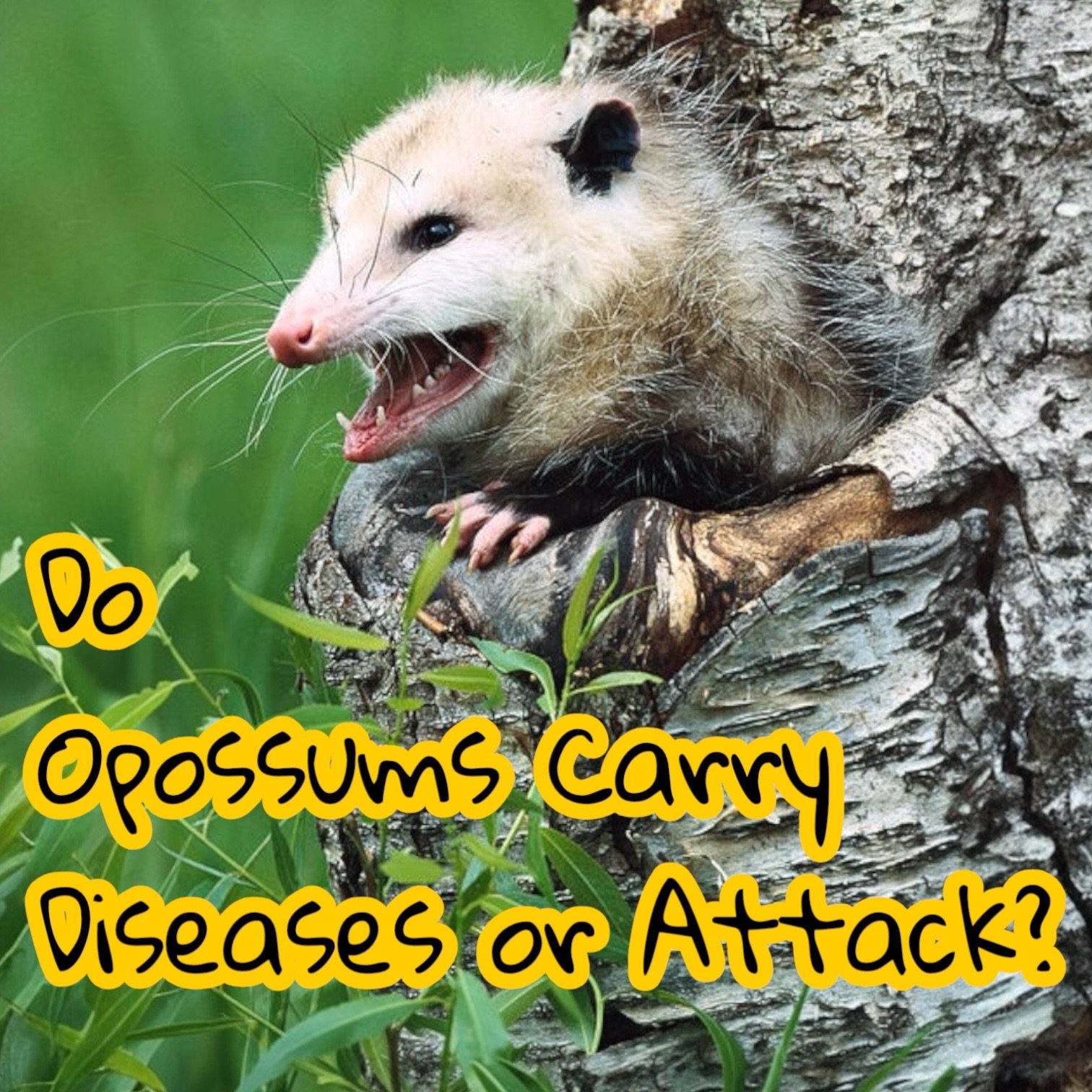
Opossums are shy, non-aggressive animals. If they feel threatened, they’ll usually try to run away first. If cornered, they may hiss or growl, but it’s all bluff. They almost never bite or attack unless they’re physically grabbed or cornered with no escape.
When it comes to pets, opossums might square off with a curious dog, but it’s usually the dog doing the harassing. Opossums don’t have sharp claws or strong jaws like raccoons, and they’re not out to pick fights. Most of the time, they just want to be left alone.
Opossums typically are not considered a threat to you or your pets… we wrote a full article on this here – Are Opossum Dangerous To People Or Pets?
One of the most surprising opossum facts I discovered is how beneficial they are around the house. They eat ticks, clean up roadkill, and rarely spread disease. So no, they’re not dangerous—if anything, they’re useful little neighbors.
Opossum Teeth Facts That Might Surprise You
If you’ve ever seen an opossum hiss, you probably noticed something terrifying: a mouth full of razor-sharp teeth. In fact, they have 50 teeth, more than any other land mammal in North America.
But here’s the twist—those teeth aren’t built for battle. They’re for crunching bugs, slugs, and fruit. The scary grin? It’s all an act. Just part of their “please don’t eat me” performance.
Most people assume those teeth mean aggression, but one of the key opossum facts that’s often missed is that their bite force is weak compared to other wild animals. They’re more bark (or hiss) than bite.
That creepy grin is pure theater—and pretty effective at keeping both predators and humans at a distance. Once you understand what those teeth are really for, you’ll see the opossum in a totally new light.
Baby Opossums: Weird, Tiny, and Totally Adorable
I’ll admit it—I’m a sucker for baby animals. And baby opossums? They might just win the award for strangest and cutest at the same time.
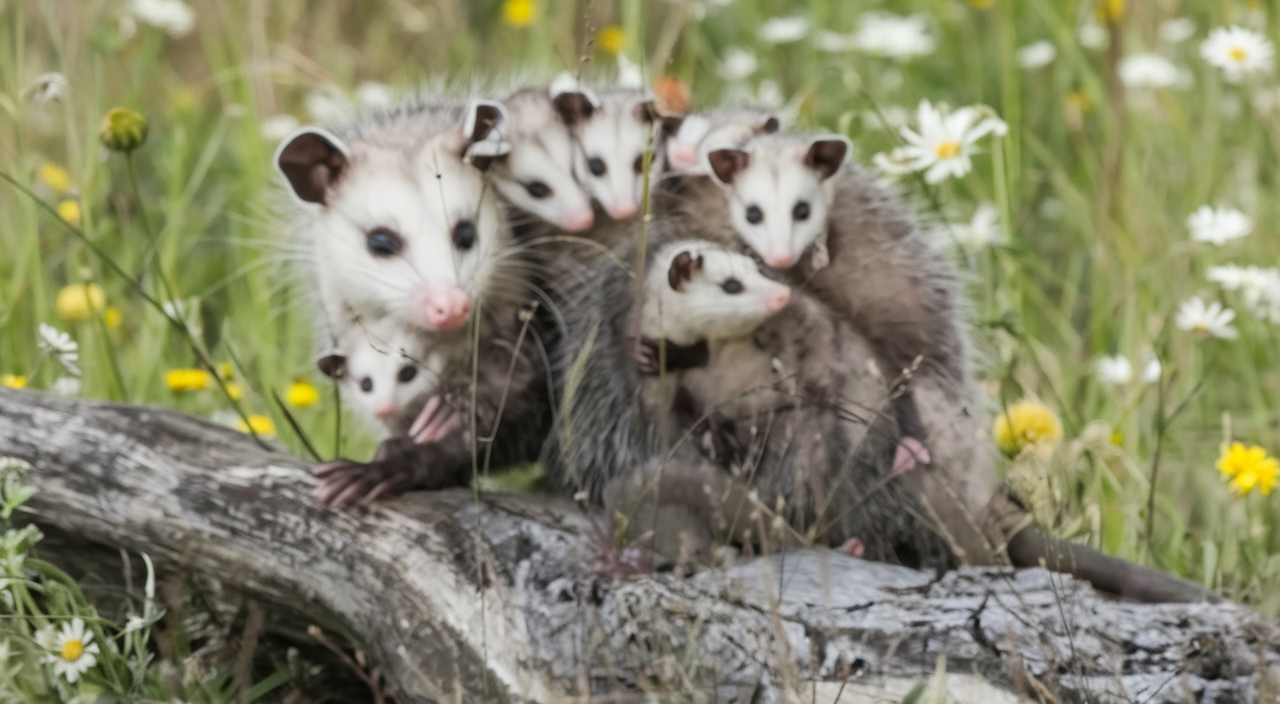
Here’s one of the wildest opossum facts most people don’t know: when baby opossums (called joeys) are born, they’re smaller than a honeybee. Seriously. They’re about the size of a jellybean, totally hairless, and immediately crawl into their mother’s pouch to latch onto a teat.
They stay in the pouch for a couple of months before graduating to riding on Mom’s back like tiny, squeaky hitchhikers. If you’ve never seen a picture of a mama opossum hauling a dozen babies around like a fur bus—go look it up. It’s hilarious and heart-melting.
These little critters are incredibly fragile in their early days, and unfortunately, not many survive into adulthood. But when they do, they become stealthy nighttime survivors just like their parents.
Why Do Opossums Have Those Hairless Tails?
I used to think their tails looked… well, kind of gross. But once I learned what they actually use them for, I started seeing them differently.
That long, hairless opossum tail is prehensile, which means it can wrap around branches, help with balance, and even carry nesting materials. Think of it like a fifth limb. It’s especially useful for climbing trees or hanging onto fence lines in tight spots.
Baby opossums use their tails for grip when riding on their mother’s back, and adults use them to steady themselves while they forage. While they don’t hang upside down from tree branches like cartoons love to show, their tails are still an essential survival tool.
So yeah—it might not be the prettiest tail in the animal kingdom, but it’s way more useful than it looks. Honestly, it’s one of those cool opossum facts that made me appreciate them even more.
Are Opossums Good for Your Backyard?
This might be my favorite opossum fact of all: they’re actually great for your yard.
I used to panic whenever I saw one waddling around my garden. I assumed it was looking to destroy something. Turns out, it was just doing pest control—for free.
Opossums eat snails, slugs, beetles, ticks, cockroaches, and even mice. If you’ve got a compost pile or a few fruit trees, they’ll help clean up fallen leftovers. They’re basically a walking cleanup crew.
They don’t dig like armadillos, they don’t tunnel like moles, and they aren’t aggressive like raccoons. They just roam through, snack on stuff that would otherwise cause you problems, and move along.
So if you’re wondering, “Are opossums good for your yard?” the answer is yes—as long as you’re cool with a quiet helper working the night shift.
Fun Opossum Facts to Share With Your Kids
My kids used to think opossums were creepy. Then I shared some of these random, weird, and fun opossum facts, and now they’re little critter fans just like me.
- They’re immune to most snake venom. Rattlesnake bite? No problem.
- They can eat over 5,000 ticks in a season. Let that one sink in.
- They don’t have thumbs—but their back feet have opposable big toes.
- They clean themselves constantly, like a cat.
- They’ve been around since the dinosaurs. Over 70 million years!
These facts are especially fun for kids who are into animals, nature, or just like knowing the weirdest thing at the dinner table. Sharing opossum trivia is a great way to turn fear into fascination, especially when they start realizing these animals aren’t scary at all—just misunderstood.
Do Opossums Hibernate in Winter?
If you live somewhere cold and stop seeing opossums in winter, you might assume they’re hibernating. But here’s another fun opossum fact—they actually don’t hibernate at all.
Unlike bears or groundhogs, opossums stay active all winter long. That said, they do slow down during the coldest months. They’ll hole up in a den, wait out snowstorms, and come out mostly during warmer spells or nights when the temperature isn’t brutal.
And since they don’t have fur on their tails, ears, or feet, they’re prone to frostbite. That’s one reason you don’t see them much in frigid conditions—they’re hiding out somewhere trying not to freeze their ears off.
If you spot one in winter, it’s likely searching for food or moving dens. Leaving a brush pile or covered corner of your shed alone can actually give an opossum a place to safely ride out the cold.
What Time Do Opossums Come Out?
If you’ve never seen one during the day, don’t worry—they’re not extinct. They’re just nocturnal, which means they mostly come out after dark.
Most opossums become active around dusk, usually just as the sun sets and the bugs start buzzing. They’ll roam their territory, looking for food—whether that’s a fallen apple, a pile of beetles, or your tipped-over trash can.
They’ve got a surprisingly good sense of smell and hearing, and they’re slow but steady travelers. You might spot them walking the fence line, scurrying under your shed, or even hanging out on your porch if you left food out for a cat.
One of the most useful opossum facts I’ve learned is that they follow the same path over and over again. So if you spot one once, chances are it’s part of its regular nighttime route. Makes you wonder how many times one’s walked past your window without you even knowing.
How Long Do Opossums Live? (Spoiler: Not Long)
This is one of those sad-but-true opossum facts: they just don’t live very long.
In the wild, the average Virginia opossum lifespan is only 1 to 2 years. If they’re lucky—and I mean really lucky—they might make it to 3. That’s mostly due to predators, cars, diseases, and the general dangers of being a slow-moving animal in a fast-paced world.
Even in captivity, they rarely live past 4 or 5 years. Their biology just wasn’t designed for longevity.
It’s part of what makes them such tough survivors. They have to mature fast, reproduce quickly, and stay alert every night of their short lives. So next time you see one wandering through your yard, give it a little respect—it’s probably already seen more than its fair share of close calls.
Weird Opossum Defense Mechanisms You Didn’t Know About
We all know about the “playing dead” trick—but that’s just one part of the opossum’s survival toolkit.
Here are a few more weird (and kind of genius) defenses they use:
- Hissing and showing teeth – They’ll open their mouths wide to flash all 50 teeth like, “Back off, buddy.”
- Foul-smelling liquid – When playing dead, they also release a nasty scent from their behind. Gross, but effective.
- Drooling and swaying – They’ll sometimes sway and drool to mimic being sick or rabid, which makes predators think twice.
- Climbing out of reach – That prehensile tail and strong feet help them climb up and out of danger when needed.
They might not be fast or strong, but these bizarre tactics help them survive—especially since they live alongside humans and predators almost everywhere.
The more I learn about opossum defense strategies, the more I realize they’re the ultimate little underdog in the animal world.
How Smart Are Opossums, Really?
Here’s a fun opossum fact most people don’t expect: these little guys are smarter than they look.
In lab tests, opossums have outperformed dogs and even rats in certain types of memory challenges. One study showed that opossums were better at remembering where food was hidden in a maze—especially if smell was involved. No surprise there, given their huge snouts.
They’re also excellent problem solvers. I’ve seen them lift lids, unlatch gates, and even climb onto bird feeders like acrobats on a mission. Combine that with their ability to adapt to urban life, and it’s clear they’ve got some serious street smarts.
No, they’re not going to do your taxes—but they’re not dumb rodents, either. In fact, they’re not rodents at all (they’re marsupials). Which is another thing most people don’t realize until they start digging into opossum facts like these.
Can You Keep an Opossum as a Pet?
I’ve actually had people ask me this more than once, and I get it—baby opossums are adorable, and adult opossums have this quirky charm. But here’s the deal: they don’t make good pets.
First, in many states, it’s illegal to keep a wild opossum without a wildlife rehabilitation license. Second, even if it were legal, they just aren’t wired for domestic life. They’re solitary, skittish, and nocturnal, which means they’re active when you’re trying to sleep and likely to hide most of the day.
They also have very specific needs—diet, temperature, space—that are hard to meet at home. And unlike dogs or cats, they don’t really bond with humans in the same way.
Now, wildlife rehabbers sometimes raise injured or orphaned opossums, and yes, there are rare cases where one becomes semi-social. But for the average person? Best to just admire them from a distance and let them do their thing out in the wild.
Opossum Tracks and Poop: How to Tell If One’s Around
Sometimes you won’t see the critter—but you’ll see signs it was there. And knowing how to identify opossum tracks and droppings can be weirdly useful, especially if you suspect one’s been hanging out under your deck or raiding your compost bin.
Here’s what to look for:
- Tracks – Opossum tracks look kind of like tiny human hands. Their back feet even have a thumb-like toe. If you see prints in soft soil or mud with five long fingers and a thumb pointing out sideways, it’s probably them.
- Poop – Their droppings are usually dark, about 1–3 inches long, and tapered at the ends. Kind of like a combo between raccoon and dog poop. Not the most glamorous opossum fact, but hey—useful is useful.
You might also notice overturned trash cans, scratched-up garden mulch, or even nesting material in your shed. They’re sneaky, but they leave clues. And once you know what to look for, you’ll start realizing how often these critters pass through unnoticed.
What’s the Difference Between a Possum and an Opossum?
This one trips people up all the time—and I used to be just as confused.
So let’s clear it up: the animal we have here in the U.S. is the opossum (with an “O”), specifically the Virginia opossum. The word “possum” is often used casually, especially in the South, but it actually refers to a different animal altogetherthat lives in Australia.
Australian possums are cuter, fluffier, and not even marsupials in the same family. Our North American opossum is a rougher-looking, rat-tailed, scavenger-style marsupial—but just as fascinating.
So while both names float around in conversation, if we’re being accurate, it’s opossum for the backyard visitors you’re spotting in the U.S. That’s one of those opossum facts that’s simple once you know it—but it’s one of the most common misunderstandings out there.
Why Opossums Deserve a Better Reputation
Before I learned anything about opossums, I thought they were weird, maybe dangerous, and definitely not welcome in my yard. Now? I’ll admit it—I’m kind of obsessed with them.
They’re harmless, helpful, and totally misunderstood. They eat ticks, avoid conflict, clean up messes, and mind their business better than most humans. They don’t cause structural damage, they rarely spread disease, and they’re way more interesting than we give them credit for.
Once you start digging into these opossum facts, you realize how much misinformation is out there. The truth? These critters aren’t pests—they’re survivors. Quirky, quiet, and just trying to make it through the night without getting squished or screamed at.
So the next time you see one creeping through your backyard, give it a second look. It might just be your new favorite nighttime neighbor.
If you enjoyed this, go check out Backyard Wildlife and Animal Facts You Didn’t Know for more surprising critter info you probably never learned in school.