Meet Your Stripey Neighbor: A Friendly Field Guide
If you’ve ever paused at dusk and watched a plump, slow-moving silhouette with a flag-like tail shuffle across your yard, you already know the quiet charm of skunks. I’ve spent many evenings observing them from a respectful distance—nose up, tail swaying, snacking on beetles like they’re hors d’oeuvres. They’re calm, deliberate, and far less interested in you than you might think. In this field guide, I’m sharing skunk facts and information I’ve learned through study, field experience, and plenty of backyard encounters—so you can admire these misunderstood animals and coexist with confidence.
What Exactly Is a Skunk? Taxonomy, Types, and Looks
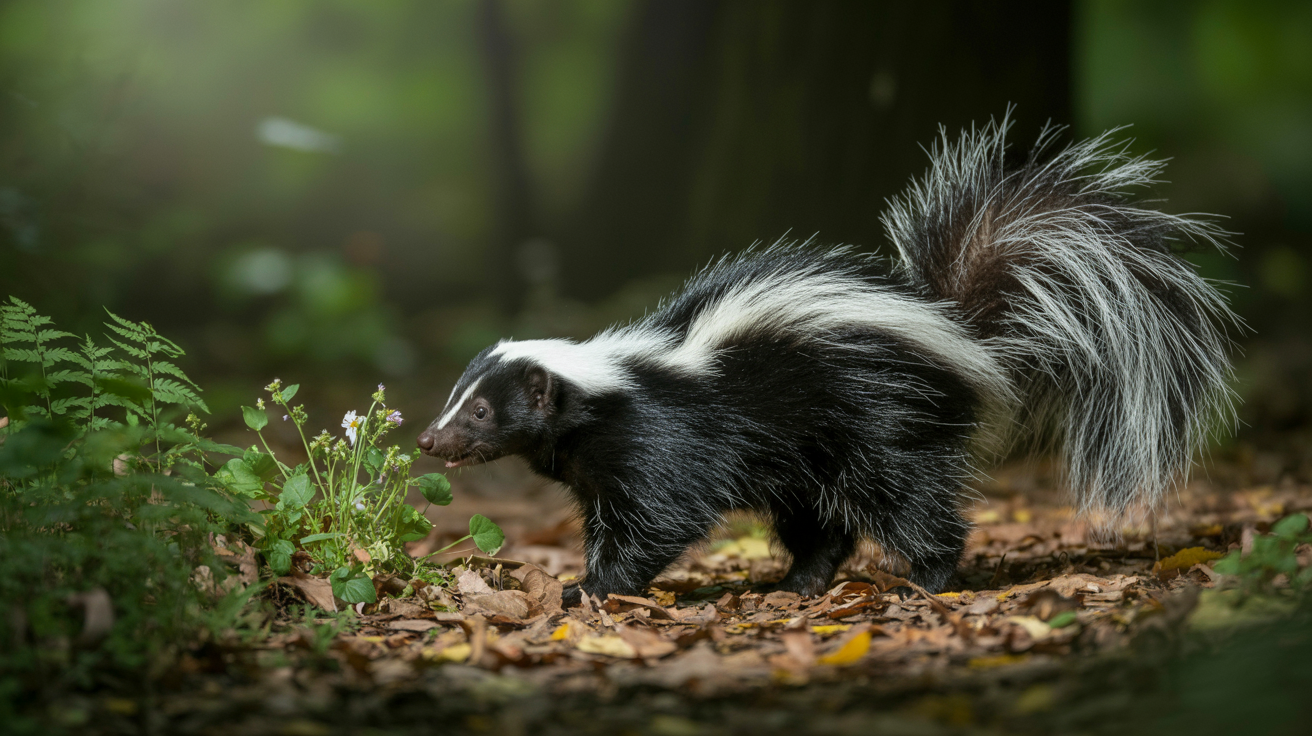
Skunks belong to the family Mephitidae, a group separate from weasels and badgers (though once lumped together). They’re native to the Americas, and while most people picture the classic striped skunk, there’s a bit of variety:
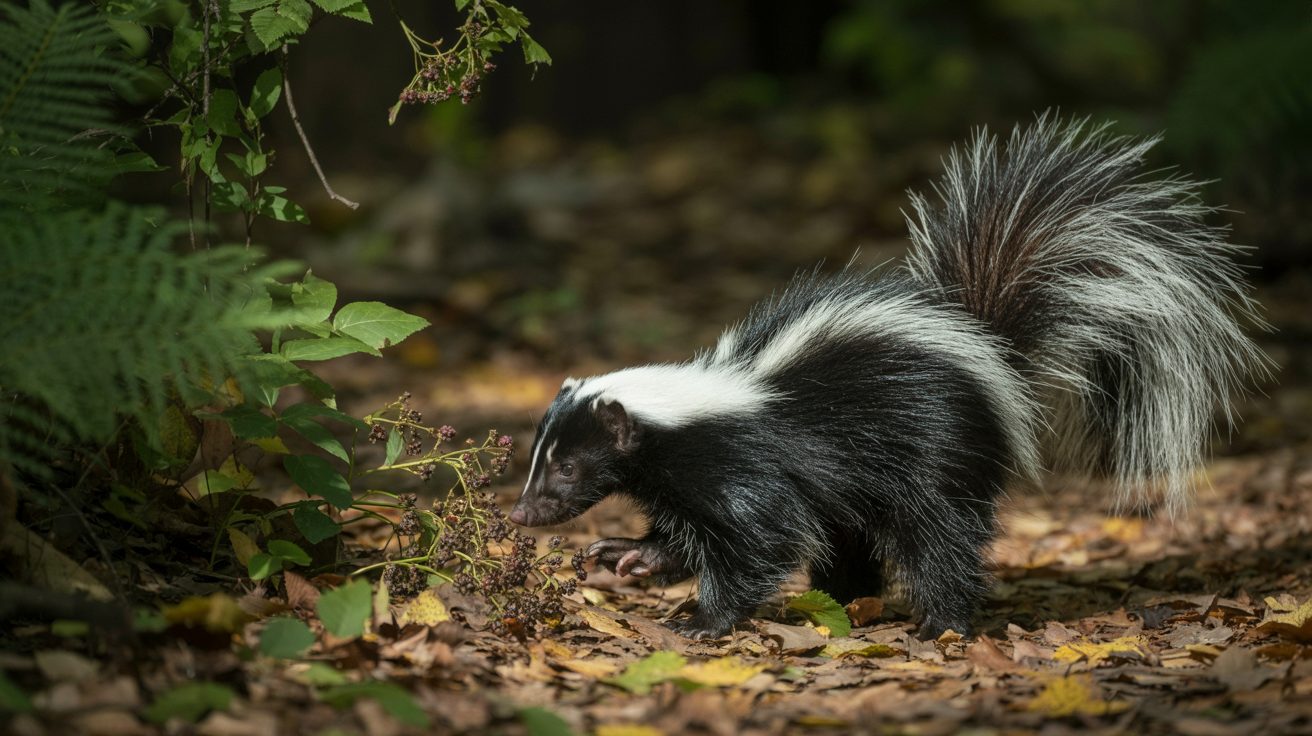
– Striped skunk (Mephitis mephitis): Common across North America. Bold white stripes from head to tail.
– Spotted skunks (Spilogale spp.): Small, agile, and acrobatic; patterns look like swirls and spots rather than solid stripes. Known for handstand warning displays.
– Hooded skunk (Mephitis macroura): Found farther south, with longer fur and a distinctive “hood” of white.
– Hog-nosed skunks (Conepatus spp.): Longer snouts for digging, found in the Americas.
Coat colors vary—some skunks are darker, some lighter. But the cue is always that high-contrast black-and-white warning pattern. It says, quite clearly: I’m gentle, but I’m not defenseless.
Fast Skunk Facts You Can Share at Dinner
I like starting with the basics. Here are skunk facts and information that are both handy and accurate:
– Size: Typically 4–10 pounds for striped skunks; spotted skunks are smaller.
– Lifespan: In the wild, many live 2–4 years; in human care, some reach 7–10 years.
– Activity: Mostly nocturnal; crepuscular (active at dawn/dusk) in mild weather.
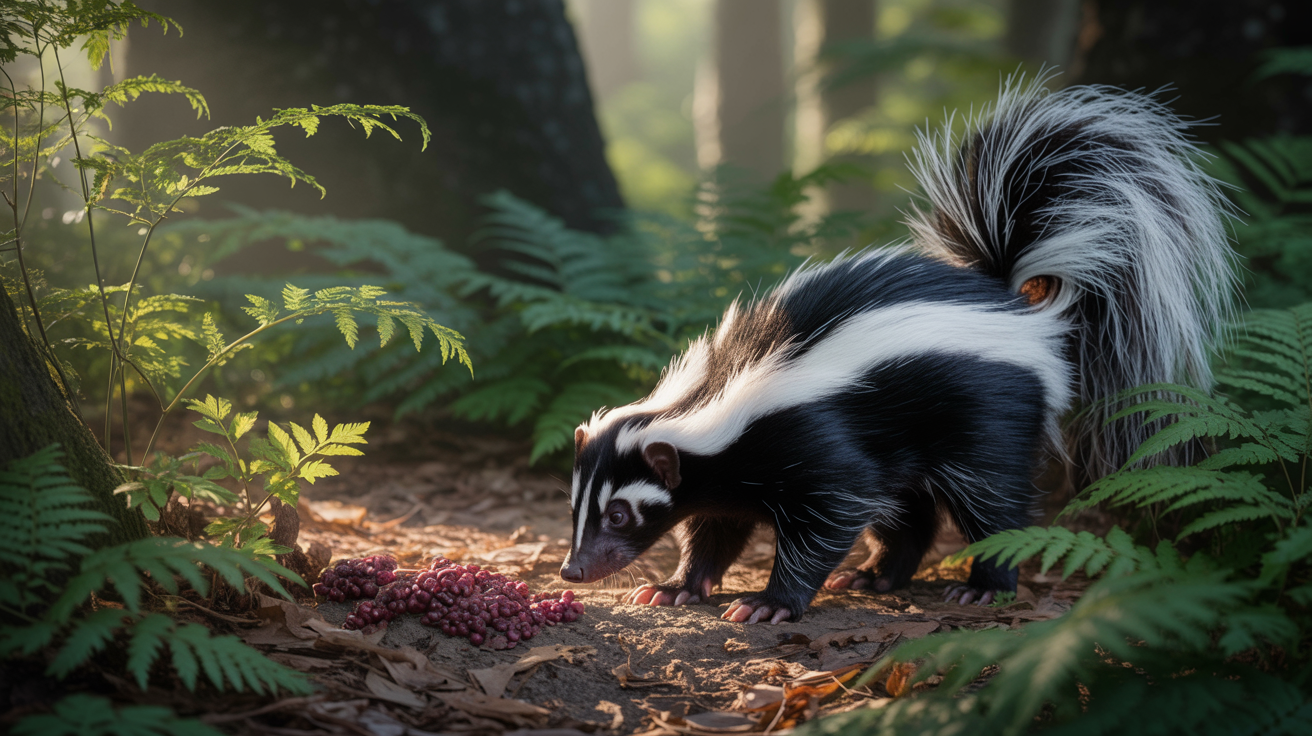
– Diet: Omnivores—beetles, grubs, crickets, small rodents, eggs, fruits, nuts, and carrion.
– Speed: Not built for sprints; they rely on confidence and that famous spray.
– Predators: Most mammals leave them alone. Great horned owls are the main natural predator, immune to the odor.
– Social life: Largely solitary, except for mothers with kits. Females may den together in winter for warmth.
– Range: Widespread across much of North America in suburbs, farms, and edges of forests.
For a broader look at your backyard’s cast of characters, I recommend this readable overview of backyard wildlife facts—it’s a fun way to see how skunks fit into the neighborhood ecosystem.
How Skunk Spray Really Works (and Why They Don’t Want to Use It)
Let’s talk about the headline act. Skunks are remarkably patient and gentle. They do not spray first and ask questions later. Their defensive sequence goes something like this:
1) Freeze and assess.
2) Stomp forefeet and raise tail.
3) Turn their back while glancing over a shoulder.
4) If pushed—spray.
The spray is a mixture of sulfur-based thiols and thioacetates stored in specialized anal scent glands. It’s potent, persistent, and—used judiciously. A skunk’s supply is limited and can take days to fully replenish, which is one reason they warn first. When they do spray, it’s impressively accurate at close range—about the length of a driveway car or so—and enough to convince almost any intruder to back off. Spotted skunks even perform a handstand to warn you before they deploy the big defense.
A key piece of skunk facts and information: the spray is for defense only. They don’t use it to mark territory or hunt. It’s a last resort.
Diet, Foraging, and the Surprising Benefits for Your Yard
Skunks are nature’s cleanup crew. On summer nights I’ve watched them nibble beetles and unearth grubs with tidy little divots—like aerating a lawn for free. Their diet flexibility helps them thrive, and it can help you too:
– Pest control: Grubs, beetles, wasps, crickets, and mice are all on the menu.
– Fruit and seed cleanup: Fallen fruit doesn’t linger when skunks are around.
– Carrion removal: They help return nutrients to the soil by cleaning up remains.
Some people worry that skunks raid bird nests; while it can happen, most foraging is at ground level and opportunistic. A few tips if you’re encouraging birds while respecting skunks:
– Place nest boxes at proper heights and with predator guards.
– Keep feeders clean and bring them in overnight.
– Use ground-level deterrents (like tidy landscaping) if you have ground-nesting birds.
If evening flyers fascinate you too, dive into bat myths and facts to see how skunks and bats share the night without stepping on each other’s toes.
Homes, Habitats, and Nightly Routines
Skunks love “edge” habitat—the messy, varied areas where forest meets field, or where your garden meets a hedgerow. They’ll den in:
– Abandoned burrows
– Brush piles and hollow logs
– Spaces under decks, sheds, or porches
– Dense shrubs or rock crevices
They do not truly hibernate, but in very cold weather they enter short bouts of torpor to save energy. On milder winter nights, they’ll forage. That’s why you might see tracks on fresh snow—tiny five-toed impressions with some claw marks.
One of my favorite pieces of skunk facts and information: spotted skunks are surprisingly agile climbers. Striped skunks, in contrast, are ground specialists and prefer gentle ramps or sloped access if they must climb at all.
Courtship, Babies, and Family Life
Timing is everything. In late winter, males wander in search of females. After mating, striped skunks typically give birth in late spring. Spotted skunks often use a reproductive strategy called delayed implantation, so their timing can shift.
– Gestation: Roughly 2 months for striped skunks.
– Litter size: Usually 4–7 kits.
– Development: Kits are born blind and helpless; their coat patterns are visible early. By a few weeks old, they can produce a faint defensive scent. Eyes open around 3–4 weeks, and they wean at about 6–8 weeks.
– On the move: By early summer, you may see a mother leading a “train” of kits, tail-to-tail. It’s adorable—and a great reason to give them a wide, respectful berth.
If you like diving into animal family lives, you’ll also enjoy exploring opossum facts and myths. Skunks and opossums share neighborhoods but have very different life strategies.
Health and Safety: Rabies, Pets, and People
A responsible guide to skunk facts and information has to cover the serious stuff. Skunks are one of several wildlife species in North America that can act as reservoirs for rabies. That doesn’t mean every skunk is dangerous; most are healthy and want nothing to do with you. But keep these precautions in mind:
– Vaccinate pets, and keep records up to date.
– Supervise dogs at night; skunk encounters often happen when a curious dog gets too close.
– Never handle skunks (or any wild animal). Call licensed wildlife rehabilitators if you find an injured animal.
– If a skunk approaches in daylight acting oddly (staggering, unafraid, disoriented), contact local animal control.
Skunks can also carry parasites like fleas and ticks, which is another reason to keep pets on veterinarian-recommended preventatives. For dog lovers looking for broader canine behavior insights, this warm read on dog facts and myths pairs nicely with wildlife-safety know-how.
Living Peacefully With Skunks: Prevention and Kind Solutions
Skunks thrive where food is easy and shelter is cozy. If you want to reduce close encounters without harming them, prevention is your best friend:
– Food sources
– Bring pet food indoors at night.
– Secure trash with tight-fitting lids.
– Manage compost and fallen fruit.
– Feed birds in the morning and tidy up spilled seed by evening.
– Shelter
– Close off gaps under decks, sheds, and porches with sturdy hardware cloth buried 6–12 inches to deter digging.
– Trim dense shrubs and move woodpiles away from the house.
– Before sealing, use a one-way door and verify no kits are inside (spring/early summer)—a wildlife professional can help.
– Deterrents
– Motion-activated lights or sprinklers can encourage wildlife to forage elsewhere.
– Remove lawn grubs to reduce a prime food source.
Above all, avoid trapping and relocating skunks yourself—it’s often illegal, frequently ineffective, and can orphan unseen kits. A humane wildlife control expert knows how to time and manage exclusions safely.
Tried-and-True De‑Skunking Recipe (Skip the Tomato Juice)
Tomato juice masks smell briefly; it doesn’t neutralize it. The well-known de-skunking solution works by oxidizing odor-causing compounds. Here’s the science-backed mixture for fur and fabrics you can rinse:
– 1 quart (0.95 L) of 3% hydrogen peroxide
– 1/4 cup baking soda (sodium bicarbonate)
– 1 teaspoon liquid dish soap
Directions:
1) Mix in an open container right before use (never store sealed—pressure can build).
2) Apply to fur or clothing, keeping away from eyes and mouth.
3) Work it in for 5–10 minutes, then rinse thoroughly with water.
4) Repeat if needed. Follow with a regular pet shampoo once the worst is gone.
Test fabrics for colorfastness, and condition a pet’s coat afterward. If the face is involved, use a damp cloth with diluted solution carefully and rinse well.
Skunks and Their Neighbors: Opossums, Raccoons, Owls, and Bats
Skunks share the night with many familiar faces. Understanding their relationships helps you read the neighborhood’s story:
– Opossums: Gentle marsupials that prefer insects and fruit. Curious how they differ from skunks? Check out these in-depth opossum facts and myths.
– Raccoons: More dexterous and bolder climbers; they’re also generalists but behave differently around homes. If you’re seeing both, it often means ample food is around.
– Owls: Great horned owls are major skunk predators. Their silent flight and limited sense of smell make them uniquely suited for hunting skunks. Learn more in this excellent overview, Learn All About Owls.
– Bats: Insect-eating neighbors who share the night skies. Skunks don’t compete with them much; they forage on the ground. To appreciate your aerial pest-control squad, read All About Bats.
For a broader, breezy tour of your local ecosystem, this backyard wildlife guide connects the dots beautifully.
Conservation Status and Why Skunks Need Our Respect
Most striped skunk populations remain stable thanks to their adaptability. However, some spotted skunk populations, particularly in parts of the U.S., have declined—likely due to habitat changes, widespread pesticide use affecting prey, roadway mortality, and loss of den sites. Every yard-friendly choice we make helps:
– Reduce pesticide use to protect insect prey and soil health.
– Drive carefully at night—wildlife crosses more than we realize.
– Offer safe corridors: dense native shrubs, brush piles away from homes, and gaps under fences for small wildlife.
– Keep water available in shallow dishes during dry spells, changing it regularly.
Skunks are not pests to eliminate—they’re native mammals that play a quiet, constructive role in our shared environment.
Myth-Busting: Clearing the Air on Common Skunk Misconceptions
I come back to these myths again and again when sharing skunk facts and information:
– Myth: Skunks spray at the slightest provocation.
Reality: They warn first—stomping, tail-raising, even retreating. Spray is a last resort.
– Myth: Tomato juice removes skunk odor.
Reality: It masks, briefly. The peroxide-baking soda solution actually neutralizes the smell.
– Myth: Skunks are eager to attack pets.
Reality: Skunks avoid conflict. Many pet encounters happen when a dog corners a skunk. Leashes and supervision prevent most problems.
– Myth: All skunks carry rabies.
Reality: Skunks can be rabies reservoirs, but most individuals are healthy. Caution and vaccination are key.
– Myth: Skunk spray lingers forever.
Reality: It’s persistent on porous surfaces and fur, but with the right approach, it can be neutralized.
Skunk Facts and Information: Quick Reference Checklist
When you need a rapid refresher, here’s your skim-friendly list:
– Identification: Black-and-white pattern; striped skunks have two stripes; spotted skunks show broken patterns.
– Behavior: Nocturnal, calm, solitary; mothers with kits in spring/summer.
– Warning signs: Stomping, tail-up, turning back toward you, spotted skunk handstand.
– Spray: Defensive only; accurate at close range; limited supply; mixture of sulfur-based compounds.
– Diet: Omnivorous—heavy on insects and grubs; helpful in gardens.
– Habitat: Edge zones; dens under decks, in burrows, and brush piles.
– Reproduction: Mating late winter; kits in late spring; family groups visible in early summer.
– Health: Rabies is a risk—vaccinate pets and avoid handling wildlife.
– Coexistence: Remove attractants, secure shelter spots, use one-way doors humanely, avoid relocation.
– Odor removal: Peroxide-baking soda-dish soap solution; fresh-mixed, open container.
Where to Learn More
If this overview sparked your curiosity, you’ll enjoy digging deeper into related neighbors and topics:
– Get to know your nighttime raptors in Learn All About Owls: Secrets of Silent Night Hunters.
– Compare gentle marsupial neighbors with Opossum Facts and Myths.
– Explore the bigger picture with Backyard Wildlife and Animal Facts You Didn’t Know.
– Browse more topics in the skunk category for additional skunk facts and information as we publish them.
I’ve always believed that when we replace fear with understanding, we make better choices—for our families, our pets, and the wild neighbors who share our space. Skunks may carry an infamous reputation, but spend a few quiet evenings watching their gentle routines and you’ll see what I see: a careful, capable animal simply doing its nighttime job. Respect their warnings, keep temptations in check, and they’ll return the favor—passing through your yard like silent gardeners, leaving the world a little more balanced than they found it.