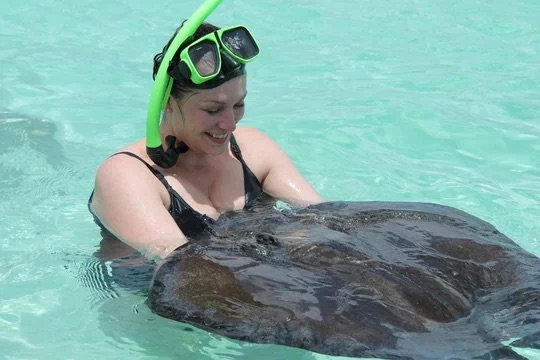
Understanding rays means getting to know one of the ocean’s most misunderstood and mesmerizing groups of animals. From gentle, plankton-eating mantas to bottom-dwelling stingrays and even electricity-generating torpedo rays, these “flat fishes” are brilliantly adapted members of the cartilaginous fish family (the same class as sharks). In this guide, we’ll explore how rays live, where they roam, what they eat, how to safely enjoy encounters with them, and why protecting them matters for the health of the seas.
If you want to keep exploring after this article, you can dive into our dedicated rays hub or compare them with their close relatives in our sharks section.
What Are Rays? The Batoid Basics
Rays belong to a group of cartilaginous fishes called batoids (superorder Batoidea). Like sharks, rays have skeletons made of cartilage rather than bone. Over millions of years, their bodies evolved into flattened, wing-like shapes that let them glide along the seafloor or cruise gracefully through open water.
Rays vs. Skates
- Reproduction: Most rays give birth to live young (viviparous or ovoviviparous). Skates typically lay egg cases, often called “mermaid’s purses.”
- Tails and spines: Many stingrays have a slender tail with one or more venomous barbs. Skates lack venomous tail spines.
- Habitat and form: Rays often have fewer dorsal fins and more streamlined, wing-like bodies; skates usually have more robust tails and small dorsal fins.
Important note: sawfish are also batoids (so, technically “rays”), not sharks—despite the saw-like rostrum that can cause confusion.
Understanding Rays: Types and Standout Species
Rays are amazingly diverse. Here are the most familiar groups you’ll encounter in oceans (and some rivers) around the world.
Stingrays
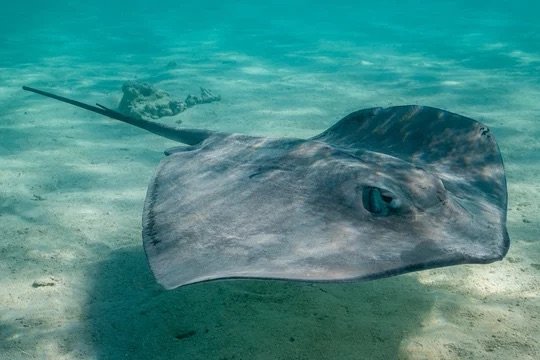
Best known for their barbed tail spines, stingrays spend much of their time on sandy or muddy bottoms, often camouflaged beneath a dusting of sediment. They’re generally shy and avoid conflict. Stings usually occur when a ray is stepped on or mishandled.
Manta Rays and Devil Rays (Mobulids)
Among the largest rays, mantas can exceed 20 feet (6 meters) across. Unlike stingrays, they filter plankton from the water column and frequent “cleaning stations” on reefs where small fish remove parasites. Mantas’ cephalic lobes (the curled extensions in front of the mouth) help funnel food as they swim.
Eagle Rays
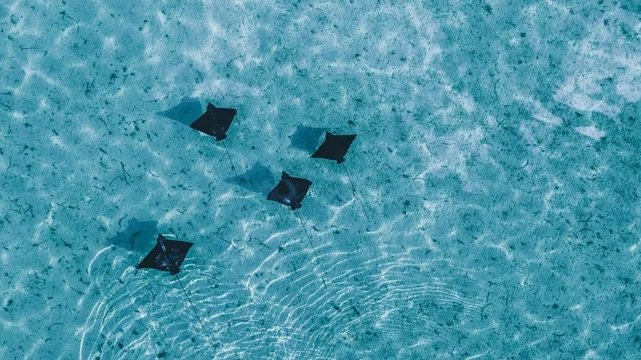
Built for graceful flight, eagle rays often sport spotted or reticulated patterns and powerful jaws. They crush clams and other hard-shelled prey with “pavement-like” teeth. Some are active swimmers over reefs and sandy plains.
Electric Rays
Sometimes called torpedo rays, these species can generate strong electric discharges, used both for hunting and self-defense. They’re typically more rounded in shape and may rest on the seafloor, awaiting prey.
Sawfish (Rays with a Saw)
With long, tooth-studded rostra (saws), sawfish are striking predators that sweep and sense prey. Sadly, many species are critically endangered due to bycatch and habitat loss.
Freshwater Stingrays
Several species live in rivers, especially in South America (like the Amazon basin) and parts of Southeast Asia. Their presence in rivers provides a fascinating example of how adaptable rays can be, but also exposes them to threats from dams and water pollution.
Ray Anatomy: Built for Stealth and Grace
Understanding rays starts with their specialized body plan:
- Cartilaginous skeleton: Lightweight and flexible, it supports their wing-like pectoral fins for gliding and rapid maneuvers.
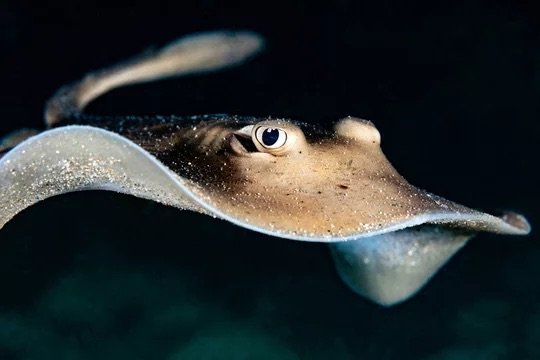
- Spiracles: Openings behind the eyes that allow rays to draw in water for breathing while resting or buried in sand—so they don’t clog their gills.
- Sensory systems: Rays possess ampullae of Lorenzini—electroreceptors that detect the faint electric fields produced by other animals. This helps with hunting, navigation, and orientation even in murky water.
- Teeth and jaws: Many stingrays have flattened, crushing teeth for clams and crustaceans. Mantas replaced crushing power with gill rakers that sieve plankton.
- Spines and venom: Stingrays often have one or more serrated tail spines covered by a thin sheath containing venom. Rays do not “shoot” spines; stings typically happen only when the animal is provoked or stepped on.
Where Rays Live: Habitats and Global Range
Rays occupy a broad range of habitats:
- Coastal shallows: Many stingrays frequent sandy lagoons and bays.
- Coral reefs: Eagle rays and reef mantas often cruise along reef slopes and cleaning stations.
- Open ocean: Oceanic mantas travel across large distances in pelagic zones.
- Rivers and estuaries: Freshwater stingrays live in rivers; some marine rays venture into brackish water.
- Temperate and tropical waters: While most prefer warmer seas, some species extend into cooler regions.
Because rays are such a key part of marine communities, learning about them goes hand in hand with getting to know other saltwater fish and invertebrates that share their environments, like jellyfish and octopuses.
What Do Rays Eat? Feeding and Daily Life
Diet varies widely among ray groups:
- Stingrays: Worms, shrimp, crabs, clams, and other invertebrates hidden in the sand. They may use water jets or their fins to uncover prey, locating it with electroreception.
- Eagle rays: Shell-crushing specialists that feed on mollusks and crustaceans.
- Electric rays: Ambush predators that stun fish or invertebrates with electric shocks.
- Mantas/devil rays: Filter feeders that sieve plankton and tiny nekton through gill rakers, sometimes performing barrel rolls through dense patches of food.
Behaviorally, many rays are crepuscular—most active at dawn and dusk—though this varies by species and environment. You’ll often see them “flying” with slow, powerful wingbeats, or lying partially buried with only eyes and spiracles exposed.
How Rays Reproduce: Slow and Specialized
Most rays invest heavily in fewer, well-developed young. Many are ovoviviparous (embryos develop inside eggs retained within the mother’s body), and some are viviparous with additional maternal nourishment beyond the yolk (a strategy called matrotrophy). Gestation can be long—often many months—and litters are small compared to many bony fishes.
That slow life history is important for conservation: populations can’t rebound quickly from heavy fishing pressure or habitat loss.
Are Rays Dangerous? Safety, Myths, and First Aid
Rays are not aggressive toward people. Most incidents involve an accidental step on a buried stingray, prompting a defensive tail flick. To reduce your risk in shallow, sandy areas where stingrays might rest, do the “stingray shuffle”—slide your feet along the bottom instead of taking big steps. This gently alerts rays, which usually swim off.
Myth-busting
- “Rays will attack unprovoked.” False. Rays prefer to avoid conflict.
- “They can shoot their barb at you.” False. The spine isn’t projectable; it’s used at close range.
- “All rays are venomous.” Not true. Stingrays have venomous spines; mantas and many other rays do not.
Basic Stingray Sting Care
For minor stings, standard first steps often include carefully exiting the water, rinsing the wound, and immersing the affected area in tolerably hot water (not scalding) to help inactivate venom proteins and reduce pain. Seek prompt medical assessment for bleeding, suspected retained spines, deep punctures, or signs of infection. This information is educational, not a substitute for professional care.
Understanding Rays and Sharks: Close Cousins, Key Differences
Rays and sharks share a cartilaginous heritage and many sensory abilities. But rays are generally flattened, with enlarged pectoral fins that form their “wings,” and many spend time on or near the seafloor. Sharks typically have a more torpedo-like shape for sustained swimming. Curious about their cousins? Explore our in-depth features on sharks.
Rays’ Ecological Role: Why They Matter
Rays are ecosystem engineers. Bottom-feeding rays stir up sediment—a process called bioturbation—that recycles nutrients and can expose prey for other animals. Mantas and devil rays help move nutrients across ecosystems by feeding in one area and excreting in another. Predators, including some sharks and orcas, feed on rays, binding them into broader marine food webs.
In some areas, reductions in shark populations may alter ray numbers and behavior, demonstrating how tightly connected ocean species are. The health of rays often mirrors the health of the habitats they use—reefs, seagrass beds, sandy flats, and offshore upwelling zones.
Threats to Rays: From Bycatch to Targeted Fisheries
While local conditions vary, common threats include:
- Bycatch: Rays are frequently caught unintentionally in trawls, gillnets, and longlines, especially in mixed fisheries.
- Targeted fisheries: Some rays are fished for meat, skin, or, in the case of mantas and mobulas, for gill plates used in certain traditional markets.
- Habitat degradation: Coastal development, trawling damage, pollution, and loss of seagrass or reef habitats can all harm ray populations.
- Climate change: Warming waters and shifting currents may affect prey distribution, migratory routes, and breeding cycles.
Given their slow reproduction, even moderate fishing pressure can cause long-term declines. Conservation measures like marine protected areas, bycatch mitigation, and trade regulations are vital. Many mobulid rays are protected under international agreements, but enforcement and local protections vary.
Responsible Encounters: Eco-friendly Ways to See Rays
Seeing rays in the wild is unforgettable. To keep encounters safe for you and the animals:
- Keep respectful distances: Use a zoom lens for photos; don’t chase, crowd, or block a ray’s path.
- Stay low and calm: Sudden movements can spook rays; relaxed body language yields better views.
- Never touch or ride rays: This can remove protective mucus, cause stress or injury, and is often illegal.
- Choose ethical operators: Support dive or snorkel tours that adhere to best-practice wildlife guidelines.
- Mind your fins: Avoid stirring sediment or damaging seagrass and corals.
How You Can Help Rays
- Eat sustainably: Follow regional seafood guides and avoid species caught by destructive methods.
- Support science and conservation: Citizen science, marine charities, and responsible tourism contribute to research and protection.
- Reduce plastic and pollution: Rays can ingest or be harmed by marine debris; coastal cleanups make a difference.
- Share knowledge: The more people understanding rays, the stronger the support for protecting them.
For a broader look at marine neighbors and the role each plays, explore our saltwater fish coverage and dive into species like the ocean’s gentle lawn mowers in our green sea turtle facts.
Frequently Asked Questions About Rays
Do rays have bones?
No. Like sharks, rays have skeletons made of cartilage. This makes them lighter and more flexible than bony fishes.
Can rays jump out of the water?
Yes. Some devil rays and mobulas are famous for spectacular breaching, possibly for communication, parasite removal, or mating displays.
Are manta rays stingrays?
No. Mantas are a different group of rays and lack the venomous tail spine that defines stingrays. Mantas are filter feeders, not bottom hunters.
What’s the difference between a ray and a skate?
Skates generally lay eggs and lack venomous spines; many rays bear live young, and stingrays have tail spines. Body shape and fin structures differ too.
Do rays sleep?
Rays rest in cycles, often lying still on the seafloor or cruising slowly. They don’t sleep like humans, but they do have periods of reduced activity.
How long do rays live?
Lifespan varies. Many stingrays live 15–25 years; mantas may live 20–40 years or more, though exact figures are still being studied.
Are there freshwater rays?
Yes. Several freshwater stingray species live in South American and Southeast Asian rivers. Some are popular in specialty aquariums but require expert care and legal compliance.
What should I do if I see a ray while wading?
Shuffle your feet and give the ray space. If you’re over a sandy bottom in warm, shallow water, assume rays may be present even if you don’t see them—they’re camouflage experts.
Rays in Context: Learning About the Ocean as a Whole
Understanding rays becomes even richer when you compare them with other ocean life. Their close kinship with sharks illuminates how cartilaginous fishes conquered nearly every marine niche—learn more across our shark stories. Rays also share habitats with plankton-eaters like jellyfish and clever cephalopods such as those in our octopus features. For more species spotlights and ocean ecology, browse the latest in rays and our wider collection of saltwater fish.
Field Tips for Divers, Snorkelers, and Beachgoers
- Timing: Early morning and late afternoon can be great for spotting rays gliding along reefs or sand flats.
- Look for signs: On sandy bottoms, search for “ray pits” where stingrays have foraged; at reefs, watch cleaning stations for mantas circling patiently.
- Stay neutral: Perfect your buoyancy to avoid contact with the bottom and to keep your presence non-intrusive.
- Photography: Angle slightly ahead of a swimming ray and let it come to you. Never block escape routes or box an animal in.
- Respect rules: Some sites have strict codes for interacting with mobulids—follow local guidelines and your guide’s instructions.
The Science of Sensing: How Rays Perceive Their World
Electroreception may be the coolest superpower in the sea. The ampullae of Lorenzini on a ray’s head can detect minute electrical signals from hidden prey like crustaceans or fish. Combined with keen smell and lateral line sensitivity (which detects water movement), rays are exquisite hunters—even without relying heavily on eyesight in murky water.
Electric rays add another twist: paired electric organs (modified muscle cells called electrocytes) can produce strong discharges to stun prey or deter threats. Their biology has even inspired medical and engineering research into bioelectricity.
From Seafloor to Open Sea: Movement and Migration
Some rays are homebodies, frequenting predictable feeding grounds. Others, especially oceanic mantas and some devil rays, undertake long migrations in pursuit of plankton blooms or seasonal breeding opportunities. Tagging studies—using acoustic or satellite tags—have revealed surprising long-distance movements and strong fidelity to key cleaning or feeding sites.
Conservation in Action: What Works
Protecting rays requires multiple tools:
- Bycatch reduction: Modified gear, time-area closures, and better handling guidelines reduce incidental mortality.
- Trade controls: International listings for manta and mobula rays regulate trade in gill plates and incentivize sustainable management.
- Marine protected areas: Safeguard cleaning stations, nursery grounds, and migratory corridors.
- Community engagement: Local stewardship and eco-tourism can create economic incentives to conserve rays and their habitats.
- Data collection: Citizen sightings, photo-ID of mantas, and tag recoveries feed crucial population models.
When we protect one species, we often protect many. For a sense of how interconnected marine life is, explore our in-depth feature on green sea turtles and then return to the wider world of rays to see similar conservation themes play out.
Key Takeaways: Understanding Rays at a Glance
- Rays are cartilaginous fishes (batoids) closely related to sharks, with flattened bodies adapted for gliding.
- Major groups include stingrays, mantas/devil rays, eagle rays, electric rays, and sawfish (which are indeed rays).
- They use electroreception, specialized jaws or gill rakers, and (for some) venomous spines or electric organs to feed and defend.
- Many species have slow reproduction and are vulnerable to overfishing, bycatch, and habitat loss.
- Responsible viewing—no touching, no chasing—keeps both you and the rays safe.
Continue Your Ocean Journey
Ready to dive deeper? Explore more species stories and science in our collections:
- Discover more about rays
- Compare cousins in sharks
- Browse the wider world of saltwater fish
- Meet mesmerizing drifters in jellyfish
- Get curious with clever cephalopods in octopuses
The more we focus on understanding rays—their lives, needs, and places in the web of ocean life—the better equipped we are to protect them. And when rays thrive, entire marine ecosystems benefit.